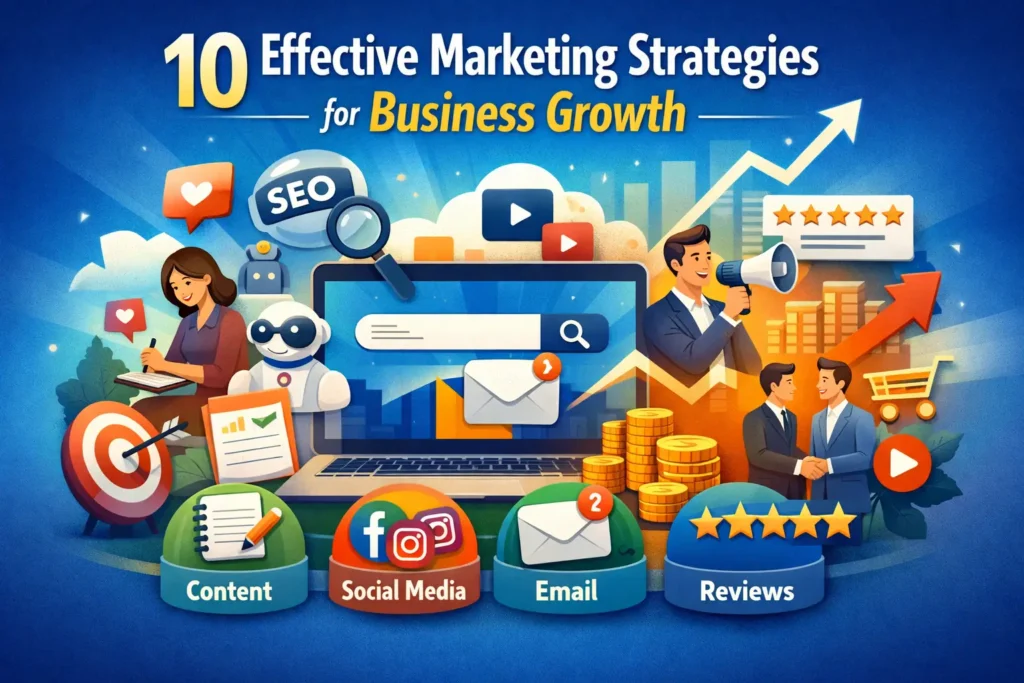
You want more customers. You want more sales. You need marketing that works.
But here’s the problem. Marketing feels confusing. Too many options. Too much advice. Everyone says something different.
Should you use social media? Start a blog? Run ads? Send emails? Do all of it?
I get it. You’re busy running your business. You don’t have time to waste on marketing that doesn’t work.
This guide shows you 10 strategies that actually bring customers. No fluff. No complicated theories. Just real tactics that work.
Pick 2 or 3 strategies. Start today. Watch your business grow.
Let’s dive in.
Why These Strategies Work in 2026
Marketing changes every year. What worked in 2022 doesn’t work now.
Here’s what’s different in 2026:
AI tools are everywhere. People use ChatGPT to find answers. Google gives AI summaries before regular results.
Customers are pickier. They research before buying. They read reviews. They check social media.
Trust matters more than ever. People buy from brands they trust. Not brands that advertise the most.
Video is king. 80% of online traffic is video now. People watch, not just read.
Your website isn’t always first. People find you on social media, AI tools, and reviews before visiting your site.
These changes mean you need different strategies now. The ones below work in this new world.
Learn about content marketing strategy that fits modern buyers.
Strategy 1: Create Content That Helps People
Stop selling. Start helping.
Write blog posts that answer questions. Make videos that solve problems. Create guides that teach skills.
Why it works:
People search for help. Google shows them your content. They trust you. Then they buy from you.
Content marketing gets 3 times more leads than old-school advertising. And it costs 62% less.
How to do it:
Think about questions your customers ask. Write simple answers. Post them on your blog.
Make short videos showing how to use your product. Put them on YouTube and TikTok.
Create a free guide or checklist. Give it away on your website.
Real example: A plumber writes “How to Fix a Leaky Faucet.” Someone reads it. Can’t fix it themselves. Calls the plumber.
Time needed: 2-4 hours per week
Cost: Free (just your time)
Check out AI copywriting tools to write content faster.
Strategy 2: Show Up on Google (SEO)
When people search for what you sell, your business should show up.
That’s SEO. Search Engine Optimization.
Why it works:
75% of people never look past the first page of Google. If you’re not there, you’re invisible.
Good SEO brings customers every single day. No ads needed.
How to do it simple:
Use words your customers actually say. If you sell “running shoes,” say that. Not “athletic footwear.”
Answer questions on your website. Create a FAQ page.
Make sure your site works on phones. Google loves mobile-friendly sites.
Get other websites to link to you. Write guest posts. Get listed in directories.
Be consistent with your business name, address, and phone number everywhere online.
Real results: Small businesses with good SEO get 50-100 visitors per month for free. Forever.
Time needed: 5-10 hours to set up, then 2 hours per week
Cost: Free to do yourself, or $500-$2,000 per month for help
Learn about entity-based SEO for better rankings.
Strategy 3: Use Social Media Where Your Customers Are
Don’t be on every platform. Be where your customers spend time.
Sell to businesses? Use LinkedIn. Sell products to young people? Use TikTok and Instagram.
Why it works:
People spend hours on social media daily. Meet them there.
Good social media posts build trust. Trust turns into sales.
How to do it right:
Pick ONE platform. Master it before adding another.
Post helpful stuff. Not just “buy my product.” Share tips. Tell stories. Show behind the scenes.
Respond to comments. Social media is social. Talk to people.
Post regularly. 3-5 times per week is good.
Don’t waste time on:
Being everywhere at once. Posting without a plan. Ignoring comments.
Real numbers: Businesses that engage on social media see 20-40% more sales than those that don’t.
Time needed: 3-5 hours per week
Cost: Free (or $100-$500 per month for ads)
Check social media marketing tips for more help.
Strategy 4: Send Emails People Want to Read
Email isn’t dead. It’s one of the best marketing tools.
For every $1 you spend on email marketing, you make $36 back. That’s huge.
Why it works:
You own your email list. Social media can disappear tomorrow. Your email list stays.
People check email daily. Your message sits in their inbox until they read it.
How to build your list:
Offer something free. A discount. A guide. A checklist. Something valuable.
Put a signup form on your website. Make it easy to see.
Ask customers for their email when they buy. Then send them helpful stuff.
What to send:
Weekly tips or updates. Not daily. People hate spam.
Special offers for subscribers only.
Helpful content they can’t get anywhere else.
Avoid:
Buying email lists. Those people don’t know you. They’ll mark you as spam.
Sending too often. Once a week is plenty.
Being boring. Make emails worth opening.
Real example: A coffee shop sends a weekly email with a special offer. Brings 30-50 extra customers every week.
Time needed: 2-3 hours per week
Cost: Free to $20 per month for most businesses
Learn about best email marketing tools to get started.
Strategy 5: Get Customer Reviews
Reviews are the new word of mouth. 90% of people read reviews before buying.
Good reviews bring customers. Bad reviews? You need to fix those fast.
Why reviews matter:
People trust other customers more than your ads.
Google shows businesses with good reviews higher in search results.
Reviews answer questions new customers have.
How to get more reviews:
Ask happy customers. Right after they buy or use your service.
Make it easy. Send them a direct link to leave a review.
Respond to every review. Good ones and bad ones. Thank people.
Where to focus:
Google reviews (shows up in search) Facebook reviews (your customers see them) Industry-specific sites (Yelp for restaurants, etc.)
Handle bad reviews right:
Respond quickly. Apologize if you messed up. Offer to fix it.
Never argue. It makes you look bad.
Learn from complaints. Fix the problem so it doesn’t happen again.
Real impact: Going from 3 stars to 4 stars can increase customers by 25%.
Time needed: 30 minutes per week
Cost: Free
Strategy 6: Use Video to Show What You Do
Video is not optional anymore. It’s required.
People watch videos to learn, shop, and make decisions. If you’re not making videos, you’re invisible.
Why video wins:
80% of internet traffic is video now. People prefer watching to reading.
Videos build trust faster. People see your face. Hear your voice. Connect with you.
Video content gets shared more than text.
What videos to make:
How-to videos showing your product or service. 2-3 minutes each.
Behind-the-scenes of your business. People love seeing how things work.
Customer testimonials. Real people talking about good experiences.
Answer common questions. One video per question.
Where to post:
YouTube (people search there like Google) TikTok and Instagram Reels (short videos, huge reach) Your website and social media
You don’t need fancy equipment:
Your phone camera works fine. Natural light is free. Just start.
Time needed: 1-2 hours per week
Cost: Free if you do it yourself
Strategy 7: Partner with Other Businesses
Find businesses that serve your same customers but aren’t competitors.
Work together. Help each other grow.
How this works:
A wedding photographer partners with a wedding planner. They refer customers to each other.
A gym partners with a nutritionist. Both businesses get new clients.
Why it’s powerful:
You reach new customers fast. No ads needed.
People trust referrals from businesses they already know.
It costs nothing. Just time and relationship building.
How to start:
List 5 businesses that serve your customers. Call them. Suggest partnering.
Refer customers to each other. Track who sends what.
Do joint events or promotions together.
Real example: A hair salon and nail salon share a space. They send customers back and forth. Both businesses grow 30%.
Time needed: 2-3 hours to set up, then minimal ongoing
Cost: Free
Strategy 8: Retarget People Who Visited Your Website
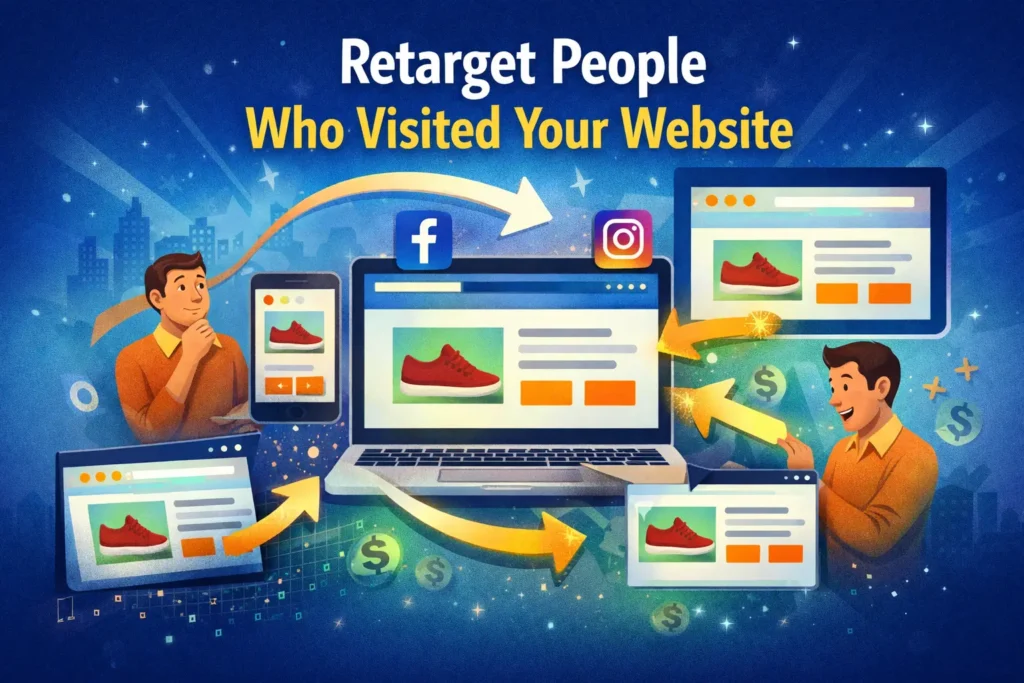
Someone visits your website. Looks around. Leaves without buying.
Most businesses lose them forever. Smart businesses bring them back.
How retargeting works:
Someone visits your site. A tracking pixel tags them.
They browse Facebook, Instagram, or other sites.
Your ads follow them. Remind them about your business.
They come back. This time they buy.
Why it works:
People rarely buy on the first visit. They need 7-8 touches before buying.
Retargeting keeps you in their mind.
It costs way less than finding new customers.
How to set it up:
Install Facebook Pixel on your website. Takes 10 minutes.
Create simple ads reminding people what they looked at.
Set a budget of $5-$10 per day to start.
Real numbers: Retargeting ads get 10 times more clicks than regular ads.
Time needed: 2 hours to set up, 1 hour per week to manage
Cost: $150-$300 per month in ad spend
Strategy 9: Host Events or Webinars
Bring people together. In person or online. Share knowledge. Build relationships.
Events turn strangers into customers faster than any other marketing.
Types of events:
In-person workshops teaching something valuable.
Online webinars solving a specific problem.
Networking events connecting people in your industry.
Open houses letting people see your business.
Why events work:
Face-to-face builds trust instantly. Even on video calls.
People who attend events are serious. They’re ready to buy.
One event can bring 10-50 new customers.
How to do it:
Pick a topic your customers care about. Not just selling. Teaching.
Promote it 2-3 weeks early. Use email and social media.
Keep it short. 45 minutes to an hour is perfect.
End with a special offer for attendees only.
Real example: An accountant hosts a free “Tax Tips for Small Business” webinar each quarter. Gets 5-10 new clients every time.
Time needed: 5-8 hours per event
Cost: Free for online, $100-$500 for in-person
Strategy 10: Track What Works and Do More of It
This is the secret most businesses ignore.
You can’t improve what you don’t measure.
What to track:
Where customers find you. Ask every new customer how they heard about you.
Which marketing brings the most sales. Not just the most clicks.
What you spend versus what you make. ROI matters.
Simple tracking method:
Use Google Analytics on your website. It’s free. Shows who visits and what they do.
Track sales in a spreadsheet. Write down where each customer came from.
Ask customers “How did you hear about us?” when they buy.
What to do with this data:
Find what works. Do more of it.
Find what doesn’t work. Stop wasting money on it.
Real example: A store realizes Instagram brings 60% of their customers. Facebook brings 10%. They stop Facebook. Put more effort into Instagram. Sales go up.
The key: Check your numbers monthly. Adjust. Repeat.
Time needed: 1 hour per month
Cost: Free
Learn about how to create a marketing budget that tracks results.
How to Pick the Right Strategies for YOU
Don’t try all 10 at once. You’ll burn out.
Here’s how to choose:
Question 1: How much time do you have?
Only 2-3 hours per week? Start with content creation and social media.
Can spend 5-10 hours per week? Add SEO and email marketing.
Question 2: What’s your budget?
$0 per month? Focus on content, social media, and SEO.
$100-$300 per month? Add email marketing and retargeting ads.
$500+ per month? Add paid ads and events.
Question 3: Where are your customers?
Businesses customers? Use LinkedIn, content, and email.
Regular people? Use Facebook, Instagram, and Google.
Young people? TikTok, Instagram Reels, and Snapchat.
Question 4: What are you good at?
Like writing? Start with content and blogging.
Like talking? Make videos and do events.
Good with tech? Focus on SEO and email automation.
My recommendation:
Pick 2 strategies. Master them for 3 months. Then add a third.
Most businesses do best with: Content + Social Media + Email.
That combination costs almost nothing and works for everyone.
Common Marketing Mistakes to Avoid
Even good strategies fail if you make these errors.
Mistake 1: Trying Everything at Once
New businesses try to be everywhere. It doesn’t work.
Better approach: Pick 2-3 strategies. Do them well. Expand later.
Mistake 2: Giving Up Too Soon
Marketing takes time. You won’t see results in week one.
Most strategies need 3-6 months to work.
Better approach: Commit to a strategy for at least 90 days before judging it.
Mistake 3: Not Knowing Your Audience
You can’t market to “everyone.” That’s marketing to no one.
Better approach: Pick one specific type of customer. Market to them.
Mistake 4: Being Boring
Your competitors are boring. Don’t be like them.
Tell stories. Show personality. Be interesting.
Better approach: Write like you talk. Show your face. Be real.
Mistake 5: Not Asking for the Sale
You create great content. People love it. Then… nothing. You never ask them to buy.
Better approach: Every piece of marketing should have a next step. “Call us.” “Buy now.” “Schedule a consultation.”
Mistake 6: Ignoring Mobile Users
70% of people browse on phones. If your website looks bad on mobile, you lose them.
Better approach: Test your website on your phone. If it’s hard to use, fix it.
Mistake 7: Copying Competitors
Your competitor does something. You copy it. But it doesn’t work for you.
Better approach: Learn from competitors. But be yourself. Do what fits YOUR business.
Check out brand awareness tips to stand out.
Real Business Results from These Strategies
Here’s what actual businesses achieved:
Local Bakery
Strategies used: Social media + content + email
Cost: $50 per month
Results: 40% more customers in 6 months. Sales up $3,000 per month.
Online Store
Strategies used: SEO + retargeting + reviews
Cost: $500 per month
Results: Went from page 3 to page 1 on Google. Sales doubled in 10 months.
Consultant
Strategies used: Content + LinkedIn + webinars
Cost: $100 per month
Results: Went from 2 clients to 8 clients. Income tripled.
Service Business
Strategies used: Google reviews + email + partnerships
Cost: $0 per month (all free)
Results: Bookings increased 50%. Referred by 3 other businesses now.
The pattern: Simple strategies done consistently beat complicated campaigns done once.
Quick Start Action Plan
Want results fast? Do this:
Week 1: Set Up Basics
Claim your Google Business listing. Add photos and info.
Create social media accounts on one platform.
Put an email signup form on your website.
Week 2: Create Content
Write 1 blog post answering a common question.
Make 1 short video showing what you do.
Post 3-5 times on social media.
Week 3: Ask for Reviews
Email 10 happy customers. Ask for Google reviews.
Respond to any reviews you have.
Week 4: Start Email
Send your first email to subscribers. Keep it simple and helpful.
Month 2 and Beyond:
Keep doing what you started. Be consistent.
Add one more strategy every month.
Track what works. Do more of that.
For more help, read about AI for content marketing and digital marketing skills.
Conclusion: Marketing Doesn’t Have to Be Complicated
You don’t need a huge budget. You don’t need an agency. You don’t need to understand everything.
You just need to:
Pick 2-3 strategies that fit your business.
Do them consistently for at least 3 months.
Track what works and do more of it.
The 10 strategies again:
- Create helpful content
- Show up on Google (SEO)
- Use social media where customers are
- Send emails people want
- Get customer reviews
- Make videos
- Partner with other businesses
- Retarget website visitors
- Host events or webinars
- Track and improve
Start today:
Pick TWO strategies from this list. Block time in your calendar this week. Do them.
Don’t overthink it. Don’t wait for perfect. Start now.
Marketing works when you actually do it. Not when you just plan it.
Your future customers are out there. These strategies help them find you.
Now go make it happen.