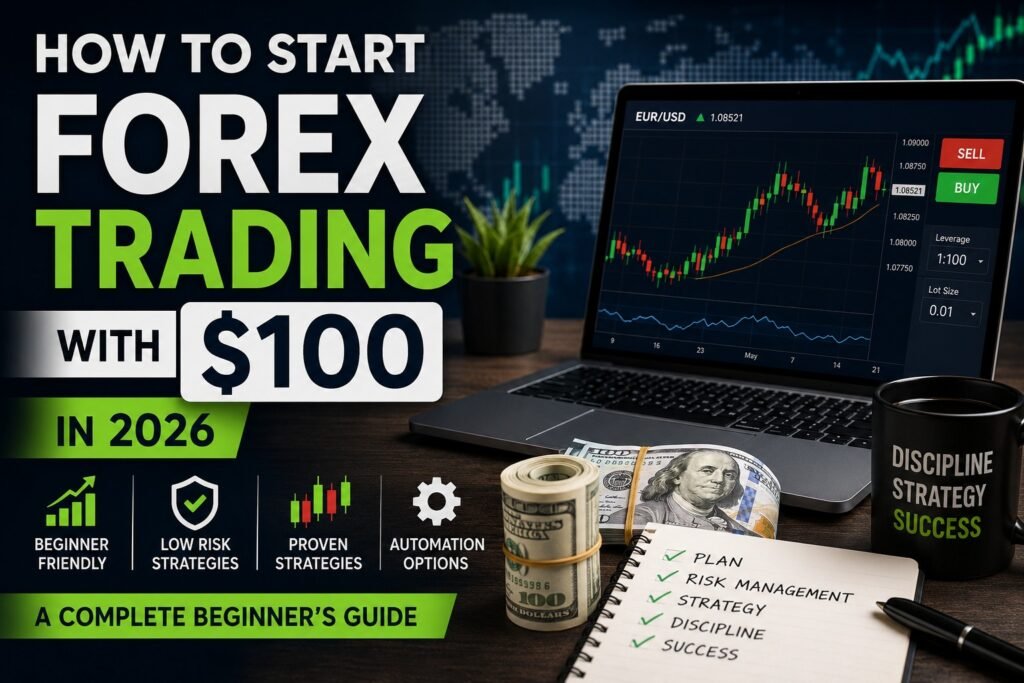
Most people think you need thousands of dollars to get started in Forex trading. The truth in 2026 is that you can open a live trading account with as little as $100 — and with the right approach, that small amount of capital can be the foundation of a genuinely profitable trading journey.
The key word there is approach. Starting with $100 does not mean gambling with $100. It means learning how to trade properly, building real experience with real money on the line, and developing the habits and discipline that will serve you when your account grows. This guide walks you through every step — from choosing your broker to placing your first trade — with complete honesty about what is realistic and what is not.
Is It Really Possible to Trade Forex with $100?
Yes — but with clear-eyed expectations. A $100 account will not replace your income in month one. What it will do is give you a real-money environment to develop your strategy, test your discipline, and build a track record. Many professional traders today started with accounts under $200.
The reason $100 is a viable starting point in 2026 is micro lot trading. A micro lot is 1,000 units of currency — one hundredth the size of a standard lot. With micro lots, a single pip move on EUR/USD is worth about $0.10. That means your $100 account can absorb normal market fluctuations without blowing up on a single bad trade, as long as you manage risk properly.
What $100 Can Realistically Do
With $100 and proper risk management — risking 1 to 2% per trade — your maximum loss per trade is $1 to $2. That means you can take 50 trades before losing your entire account even if every single one goes against you. In practice, a solid strategy with a 1:2 risk-to-reward ratio only needs to win 40% of trades to be profitable. A $100 account gives you enough runway to actually find that edge.
What $100 Cannot Do
It cannot survive reckless leverage use. It cannot absorb trading sizes that are too large for the balance. And it cannot turn into $10,000 in a month — anyone telling you otherwise is selling something. Realistic monthly returns for a disciplined trader on a small account are 3 to 8%. Compounded consistently, that is genuinely powerful. Chased recklessly, it ends in a blown account.
Step 1: Choose the Right Broker for a Small Account
Your broker choice matters enormously when starting with $100. The wrong broker will eat your capital in spreads, commissions, and poor execution before you ever have a chance to learn. Here is exactly what to look for:
Low Minimum Deposit
Many top brokers in 2026 accept deposits as low as $10 to $50. You do not need to stretch to a $500 minimum. Brokers like Exness, XM, and IC Markets all accept small starting deposits while offering professional-grade trading conditions.
Micro Lot Support
Confirm your broker allows micro lot trading (0.01 lots). This is non-negotiable for a $100 account. Without micro lots, even a single standard lot trade would represent 1,000% of your account — instant wipe out territory.
Tight Spreads on Major Pairs
Look for spreads under 1 pip on EUR/USD during the main sessions. Wide spreads on a small account are a significant drag — if you are paying 3 pips to enter a trade targeting 10 pips, you have already given away 30% of your potential profit before the market even moves.
MT4 or MT5 Platform
Both MetaTrader platforms are industry standards for a reason — they are reliable, feature-rich, and compatible with automated tools and Expert Advisors. If you ever decide to explore automation later, platforms offering tested Expert Advisors for MT4 and MT5 will require your broker to support these platforms. Stick to brokers that offer both.
Regulation
Only use brokers regulated by tier-one authorities — the FCA (UK), ASIC (Australia), CySEC (Cyprus), or FSCA (South Africa). You can verify any broker’s regulatory status through official registers. The Financial Conduct Authority’s register allows you to check any FCA-authorised broker in seconds.
Step 2: Understand Leverage — The Tool That Can Help or Destroy You
Leverage is the most misunderstood concept for new traders starting with small accounts. Used correctly, it makes micro lot trading viable. Used recklessly, it turns a $100 account into $0 faster than any bad strategy ever could.
How Leverage Works on a $100 Account
At 1:100 leverage, your $100 controls a $10,000 position. A 1% move against you on that position equals a $100 loss — your entire account. This is why leverage needs to match your position size, not just exist as a number on your broker’s marketing page.
The Right Leverage Approach for Beginners
With a $100 account, use 0.01 lots (micro lots) and never more than 1 to 2% of your account per trade regardless of what leverage your broker offers. Your effective leverage should stay between 1:5 and 1:20 in practice, even if your broker provides 1:500. Think of available leverage as a ceiling — never as a target.
For a deeper understanding of how leverage, lot sizes, and risk management interact, Investopedia’s Forex leverage guide remains one of the clearest explanations available and is worth reading before opening your first live trade.
Step 3: Pick One Strategy and Learn It Completely
The single biggest mistake beginner traders with small accounts make is jumping between strategies every two weeks. They lose a few trades, decide the strategy is broken, find a new one on YouTube, lose a few more trades, and repeat the cycle until the account is empty.
Choose one strategy. Learn it completely. Give it at least 50 to 100 trades before drawing any conclusions. Here are the three strategies best suited to a $100 starting account:
Swing Trading — Best Overall for Beginners
Analyse the Daily or H4 chart, identify a strong level, enter in the direction of the trend with a micro lot, and target 50 to 150 pips. Wide enough stop losses mean you are not knocked out by normal market noise. Requires only 30 to 45 minutes of analysis per day and is compatible with any lifestyle or job.
Trend Following with Moving Averages
Use the 50 EMA and 200 EMA on the H4 chart. When both are pointing up and price pulls back to the 50 EMA, look for a buy entry. When both are pointing down and price pulls back to the 50 EMA, look for a sell entry. Simple, backtestable, and effective across all major pairs in 2026.
Support and Resistance Breakouts
Mark clear horizontal support and resistance levels on the Daily chart. Wait for a convincing break with a strong candle close beyond the level. Enter on the retest of the broken level with a tight stop and a 2:1 or 3:1 target. This strategy produces fewer trades but very high-quality setups.
For more context on how different trading styles fit different personalities and schedules, our complete Forex trading guide for 2026 covers all five major strategies in full detail, including which market sessions work best for each approach.
Step 4: Set Up Your Risk Management Before You Place a Single Trade
Risk management is not something you figure out after you start losing. It is something you set up before you place your first trade and follow with zero exceptions from day one. These are the specific numbers for a $100 account:
Maximum Risk Per Trade: $1 to $2
One to two percent of $100 is one to two dollars. This is your hard limit on every single trade. Calculate your position size and stop loss distance before entering — never guess.
Minimum Risk-to-Reward Ratio: 1:2
If you risk $1, your target must be at least $2. If you risk $2, your target must be at least $4. This means even winning only 4 out of 10 trades leaves you profitable overall. Never take a trade where you are risking more than you stand to gain.
Daily Loss Limit: $3 to $5
If you lose three to five dollars in a single day, stop trading until the next session. No revenge trades, no increasing size to recover losses. Three to five percent of a $100 account is your maximum daily damage. Hit it and walk away.
The principles behind position sizing and drawdown management are well documented by professional trading educators. BabyPips.com’s School of Pipsology remains one of the most respected free Forex education resources available and dedicates full modules to position sizing for small accounts.
Step 5: Demo Trade First — Then Go Live
Before you put any real money at risk, spend at least four to six weeks trading on a demo account with a balance set to $100 — exactly matching your intended live account size. The goal is not just to get comfortable with the platform. The goal is to achieve consistent profitability.
If you cannot make money on a $100 demo account over six weeks, you will not make money on a $100 live account. The demo phase is where you prove your strategy works, build your discipline, and identify the emotional patterns that will challenge you when real money is on the line.
What to Track During Demo Trading
- Win rate across at least 30 trades
- Average risk-to-reward ratio achieved, not just targeted
- Maximum drawdown — did your account drop more than 10% at any point?
- Emotional reactions — did you follow your rules under pressure or break them?
- Consistency — are your profitable weeks the result of skill or luck?
Step 6: Grow Your Account Gradually with Compounding
Once you are trading live with your $100 account and generating consistent returns, the most powerful tool you have is compounding. Reinvesting your profits rather than withdrawing them means your account size — and therefore the dollar amount you can make per trade — grows every month.
A Realistic Compounding Example
$100 at 5% monthly return = $105 after month one. $105 at 5% = $110.25 after month two. Over 12 months of consistent 5% monthly returns, $100 becomes approximately $179. Over 24 months, it grows to around $321. These are not exciting headlines, but they are how real traders build real accounts — through patience, consistency, and compounding discipline.
When to Scale Up
Only increase your position size when your account has grown enough that your new 1 to 2% risk still fits micro lot sizes comfortably. Never increase size because you feel confident, had a good week, or want to recover faster from a drawdown. Size up only when your account balance mathematically justifies it.
Step 7: Use Automation to Work Smarter on a Small Account
One of the biggest advantages available to small account traders in 2026 is affordable automation. Expert Advisors — automated trading programmes for MT4 and MT5 — can monitor markets, execute trades, and manage positions 24 hours a day without the emotional drawbacks of manual trading. GregForex.com specialises in tested, affordable EAs starting from under ten dollars — making automation genuinely accessible even on a $100 account. Running a tested EA overnight or during sessions you cannot monitor means opportunities are captured consistently, without emotion, on every pair you trade.
How to Use an EA Responsibly on a $100 Account
- Always run any EA on a demo account for at least four weeks before live deployment
- Set maximum lot size to 0.01 to match your account’s risk parameters
- Check the EA’s verified backtest and drawdown figures before trusting it with real money
- Use a VPS service to keep your EA running 24/5 without relying on your personal computer
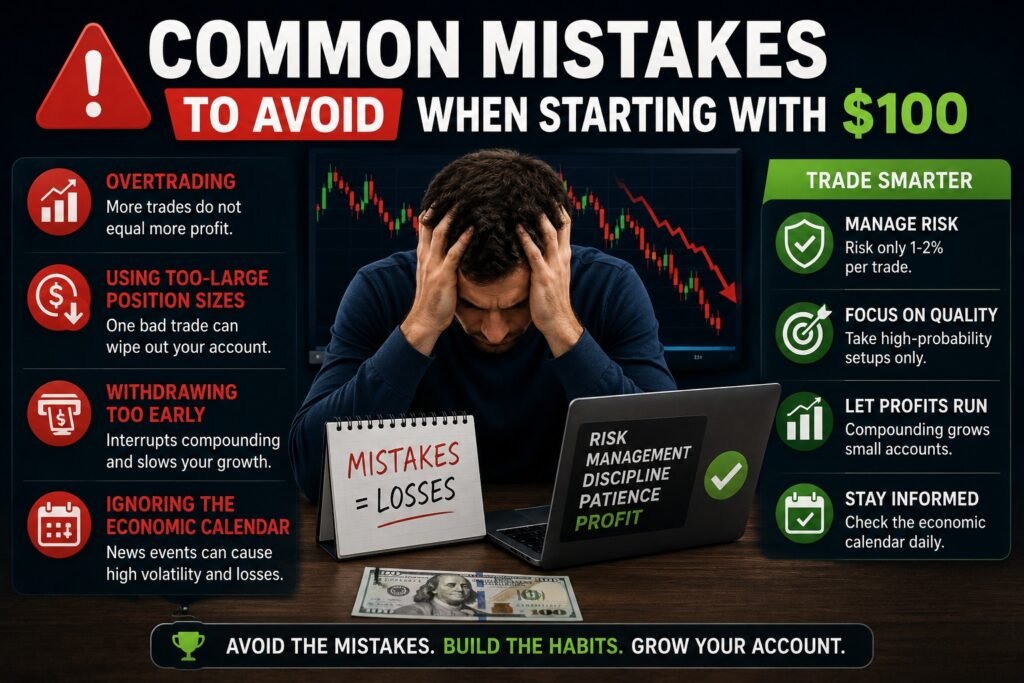
Common Mistakes to Avoid When Starting with $100
Overtrading
More trades do not equal more profit. Three to five quality setups per week will outperform twenty forced, low-quality entries every time. Patience is a genuine edge.
Using Too-Large Position Sizes
Trading 0.1 lots on a $100 account means a single 100-pip move against you wipes your account. Match your lot size to your account balance and risk rules every single time, not your emotions.
Withdrawing Too Early
The temptation to withdraw your first $20 profit and celebrate is real, but counterproductive. Let your account compound. The most powerful phase of small account growth is the early months when discipline is establishing itself and the compounding math is beginning to work.
Ignoring the Economic Calendar
Trading through major news events without awareness is the fastest way to see your stop loss hit on a $100 account. The Forex Factory economic calendar is free, reliable, and takes two minutes to check every morning. Make it a non-negotiable part of your daily routine.
How Trading Discipline Connects to Your Broader Financial Life
Something most trading guides miss entirely is the connection between trading discipline and overall personal financial health. The best traders are not just skilled at reading charts — they are genuinely organised and intentional about money in every area of their life.
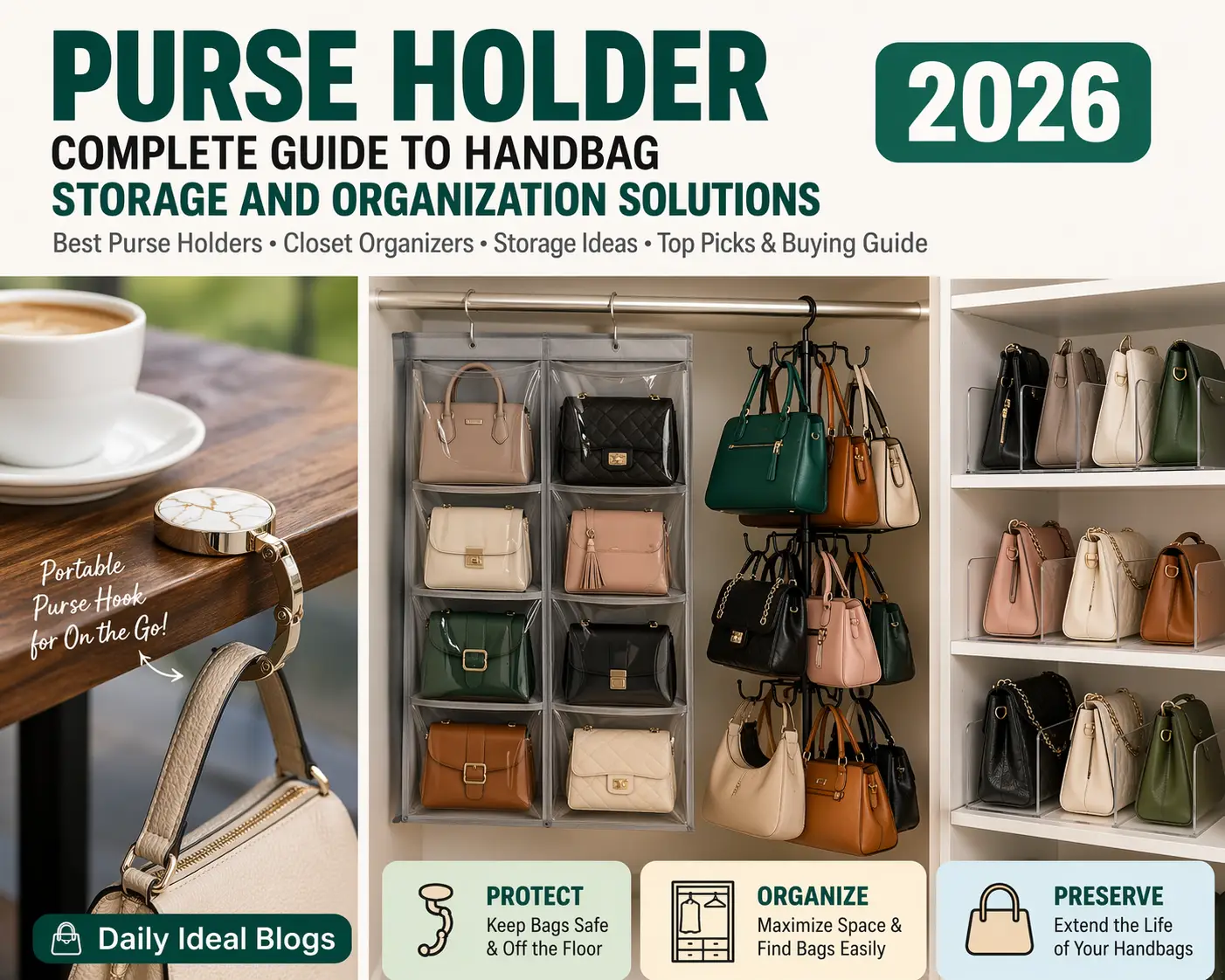
This shows up in practical ways. A trader who plans their purchases, organises their space, and thinks about value versus cost in daily decisions brings exactly that mindset to their trading terminal. Whether it is choosing quality platform heels that will last versus cheap alternatives, or making smart storage decisions like a proper purse and handbag organisation system — the underlying habit is the same: protect what you invest in, choose deliberately, and think long-term.
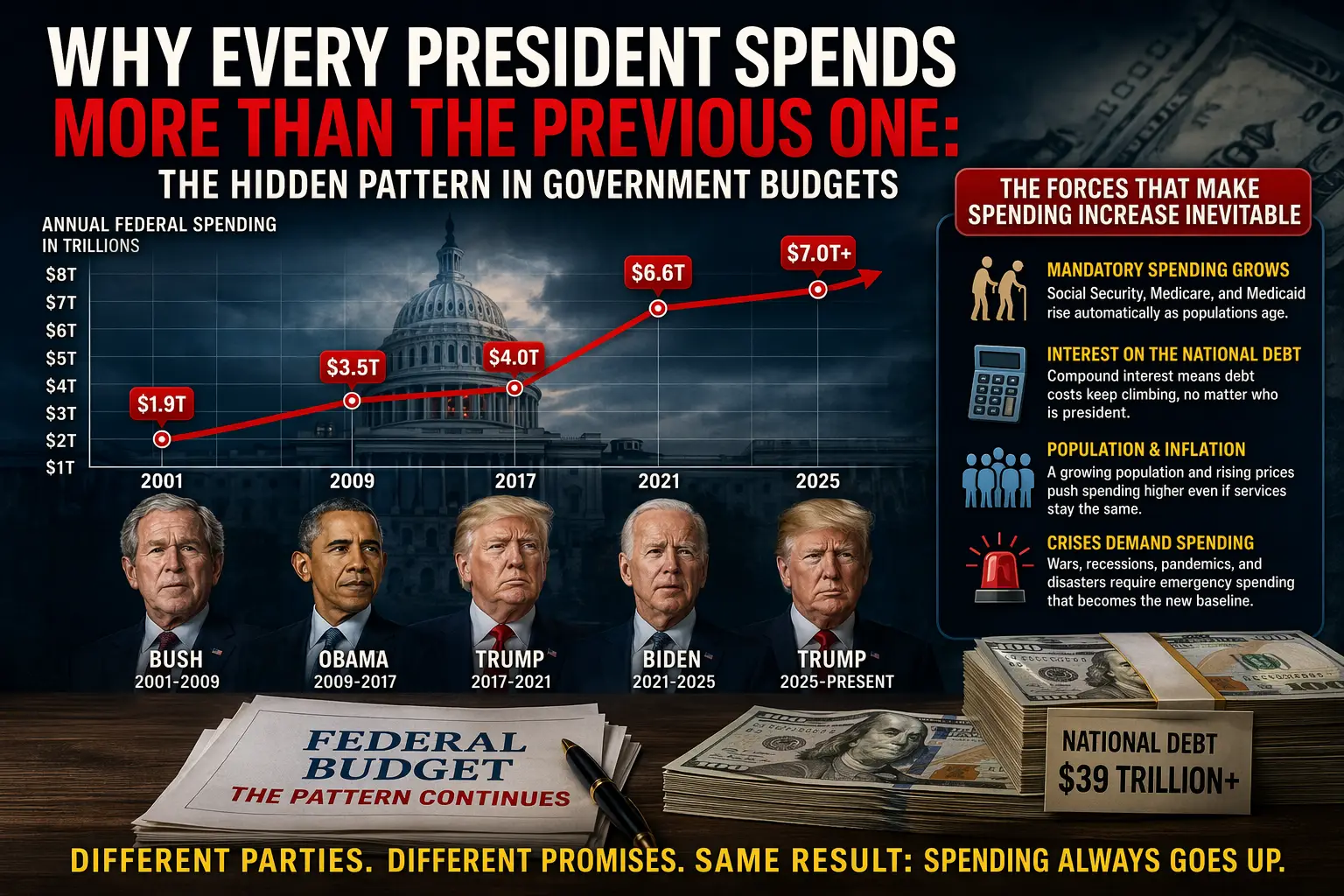
The same applies to how you manage information and appearance. Researching a purchase thoroughly before committing money — as detailed in guides like the best tape-in hair extensions — is precisely the habit a disciplined trader applies before entering any position. Know the product, understand the downside, do not rush. And being aware of broader trends, from evolving fashion directions like hexagonal sunglasses to understanding government spending cycles and what they mean for the economy, builds the kind of broad awareness that separates complete traders from narrow chart-readers.
Final Thoughts: $100 Is Enough to Start — If You Start Right
Starting Forex trading with $100 is completely viable in 2026 if you approach it correctly. Use micro lots. Risk 1 to 2% per trade. Find one strategy and master it. Demo trade before going live. Let compounding do the heavy lifting over time.
The traders who blow $100 accounts do so because of the same reasons traders blow $10,000 accounts — reckless leverage, no risk management, strategy hopping, and emotional decision-making. The amount is almost irrelevant. The discipline is everything.
For a complete breakdown of strategies, risk rules, and the daily habits of profitable traders, read our full Forex trading guide for 2026. And when you are ready to explore automation, the affordable Expert Advisors at GregForex.com are tested, transparent, and built for retail traders at every account size.