Over 80% of searches in 2026 end without a click. Users get answers from AI Overviews, ChatGPT, or Perplexity—never visiting your website. Your brand could be cited in thousands of AI conversations today, influencing purchase decisions, without a single session appearing in Google Analytics.
Welcome to the zero-click reality. Traditional SEO metrics like rankings, impressions, and click-through rates no longer tell the complete story. The new battleground for brand visibility lives inside AI-generated answers, where being cited matters more than being clicked.
According to Gartner, traditional search volume will drop 25% by end of 2026 as users increasingly rely on AI chatbots and virtual agents. Yet most companies have zero visibility into how they appear inside these systems—creating blind spots that competitors are already exploiting.
This comprehensive guide presents the best AI visibility tools that actually improve lead quality in 2026, based on analysis of 12+ platforms, current pricing, and real attribution capabilities. You will understand what AI visibility means, why it determines lead quality, which tools deliver measurable results, and exactly how to implement visibility tracking that connects to revenue.
Whether you lead SEO strategy, manage demand generation, or run an agency, these tools transform blind guessing into data-driven optimization.
What Is AI Visibility and Why It Matters for Lead Quality
Let’s start with definitions and business impact:
AI Visibility Defined: AI visibility measures how often your brand appears in AI-generated answers across platforms like ChatGPT, Google AI Overviews, Perplexity, Gemini, and Claude—and whether those mentions contribute to qualified traffic or pipeline outcomes.
Why It Determines Lead Quality: According to recent research, 37% of product discovery queries now start in AI interfaces. These are high-intent searches from people actively researching solutions. If AI systems do not cite your brand, you are invisible to these qualified prospects.
The Attribution Challenge: Traditional tools track clicks and conversions. But in zero-click experiences, prospects never visit your site. AI visibility tools bridge this gap by:
- Tracking brand mentions across AI platforms
- Analyzing sentiment and positioning
- Correlating AI citations with downstream conversions
- Identifying which content AI systems trust
The Lead Quality Connection: Strong AI visibility correlates with:
- Higher brand awareness among target accounts
- Increased direct navigation traffic
- Better lead quality scores
- Shorter sales cycles
- Premium positioning versus competitors
Understanding AI marketing predictions provides broader context for visibility importance.
The State of AI Visibility: February 2026 Reality Check
Current landscape based on latest data:
Search Behavior Shifts:
- 80%+ of searches ending without clicks
- ChatGPT hit 1 million users in 5 days (fastest adoption ever)
- 37% of product discovery starts in AI interfaces
- Users trust AI recommendations over traditional ads
- Zero-click experiences now majority of journeys
Business Impact:
- Brands cited consistently see 3x higher consideration
- AI-influenced contacts convert 25% faster
- Share of voice in AI correlates with market share growth
- Early visibility advantage compounds over time
- Competitors invisible to AI become forgotten quickly
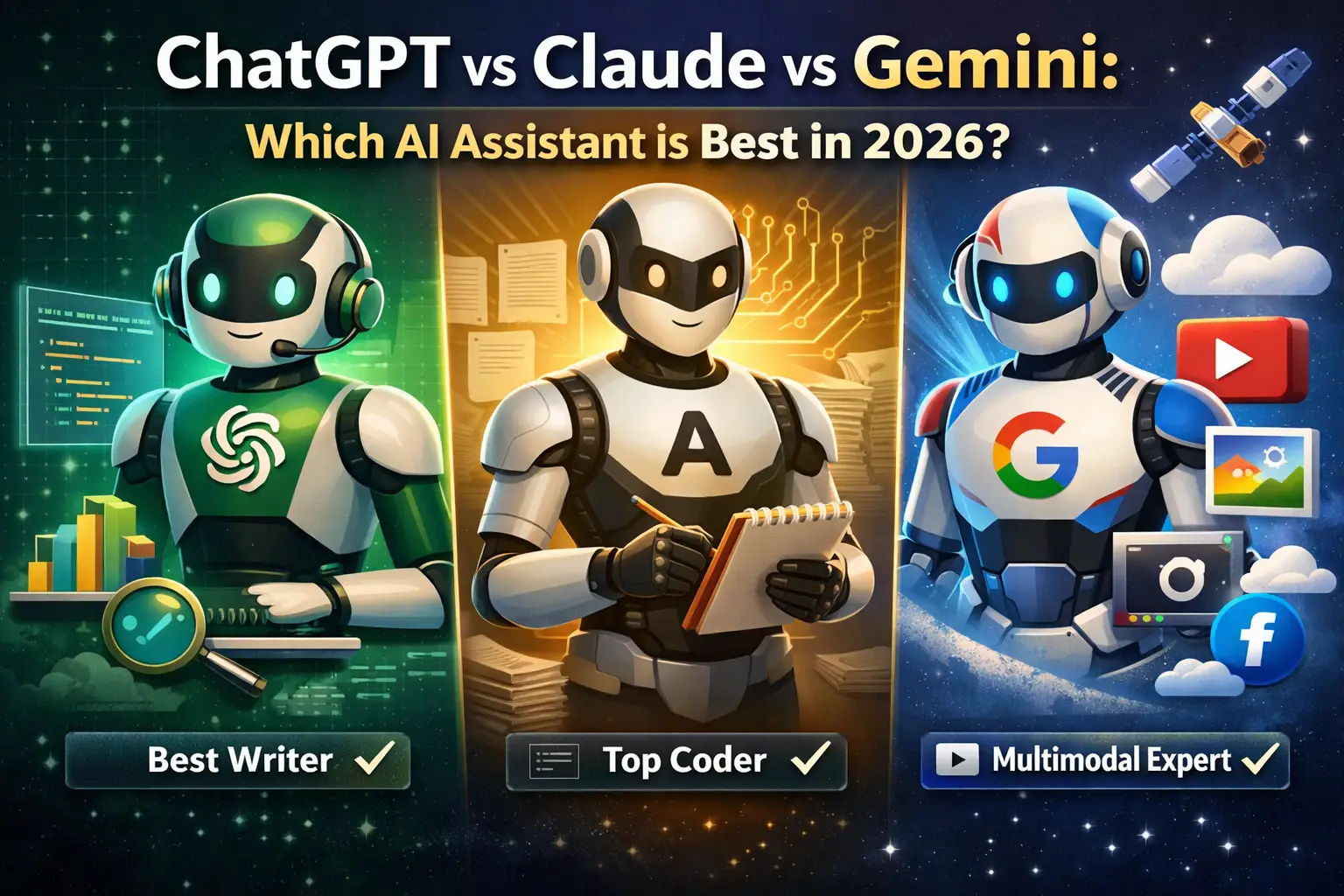
Platform Landscape: Five major ecosystems dominate AI search visibility:
- ChatGPT: Largest user base, conversational answers
- Google AI Overviews: Integrated with traditional search
- Perplexity: Shows direct source links prominently
- Gemini: Blends web and AI outputs
- Claude: Growing enterprise adoption
Tool Maturity:
- First-generation tools (2024-2025) tracked basic mentions
- Current tools (2026) provide attribution and competitive intelligence
- Advanced platforms connect visibility to CRM and revenue
- New players launching monthly as market explodes
Learn about entity-based SEO optimization for AI systems.
6 Essential Features of AI Visibility Tools
Before reviewing specific tools, understand what capabilities matter:
Feature 1: Multi-Platform Tracking
What It Means: Monitor visibility across ChatGPT, Perplexity, Gemini, AI Overviews, and Claude from single dashboard.
Why It Matters: Users fragment across platforms. Tracking only one creates incomplete picture.
Look For:
- Coverage of 5+ major AI platforms
- Consistent data collection methodology
- Platform-specific insights
- Unified reporting across all platforms
Feature 2: Prompt-Level Visibility Analysis
What It Means: Test specific search queries and see exactly how AI responds, what sources get cited, and where you rank.
Why It Matters: Generic brand tracking misses context. Prompt-level analysis reveals what queries drive visibility.
Look For:
- Custom prompt testing capabilities
- Batch prompt analysis
- Competitive prompt comparison
- Query categorization by funnel stage
Feature 3: Citation and Source Influence
What It Means: Identify which pages, domains, or content types AI systems trust and cite most frequently.
Why It Matters: Understanding what influences AI citations enables strategic content optimization.
Look For:
- URL-level citation tracking
- Content format analysis
- Domain authority signals
- Competitor citation sources
Feature 4: Sentiment and Positioning Analysis
What It Means: Measure how AI describes your brand—tone, context, relative positioning versus competitors.
Why It Matters: Being mentioned negatively or positioned unfavorably damages lead quality.
Look For:
- Sentiment scoring (positive, neutral, negative)
- Competitive positioning maps
- Context analysis (what topics trigger mentions)
- Share of voice metrics
Feature 5: Lead Quality Attribution
What It Means: Connect AI visibility metrics to downstream business outcomes—branded search, demo requests, qualified leads.
Why It Matters: Visibility without business impact is vanity metric.
Look For:
- CRM integrations
- Google Analytics connections
- Custom conversion tracking
- Revenue attribution models
Feature 6: Actionable Recommendations
What It Means: Platform identifies optimization opportunities—content gaps, citation opportunities, competitive weaknesses.
Why It Matters: Data without direction wastes time. Best tools prescribe specific actions.
Look For:
- Content gap analysis
- Quick win identification
- Competitor vulnerability detection
- Prioritized action lists
Top 10 AI Visibility Tools for Lead Quality (2026)
Based on capabilities, attribution, and ROI:
1. Enterprise-Grade Platforms
Best For: Large organizations needing comprehensive coverage and attribution
Typical Features:
- Multi-platform tracking (5+ AI systems)
- CRM and analytics integrations
- Custom reporting and dashboards
- API access for data warehouses
- Dedicated support and onboarding
Pricing Range: $500-$5,000+ monthly
Use When:
- Processing thousands of queries monthly
- Need attribution to revenue
- Multiple stakeholders require access
- Budget available for complete solution
Lead Quality Impact: Enterprise tools provide data connecting AI visibility to pipeline and revenue, enabling ROI calculation and strategic investment decisions.
2. Mid-Market Solutions
Best For: Growing companies balancing capabilities and cost
Typical Features:
- Multi-platform basics (3-4 AI systems)
- Standard integrations
- Pre-built reports
- Regular data refreshes
Pricing Range: $200-$1,000 monthly
Use When:
- Mid-sized marketing teams
- Growing content operations
- Need competitive intelligence
- Want attribution without enterprise budget
Lead Quality Impact: Mid-market tools track visibility trends and provide competitive context, helping teams prioritize content that drives consideration.
3. Starter and Freemium Options
Best For: Small businesses and startups testing AI visibility
Typical Features:
- Basic mention tracking
- Limited platform coverage
- Manual prompt testing
- Community support
Pricing Range: Free – $100 monthly
Use When:
- Just starting AI visibility work
- Validating importance before investment
- Small content team
- Limited budget
Lead Quality Impact: Entry tools establish visibility baselines and identify major gaps, enabling prioritized improvements even with limited resources.
4. SEO Platform Add-Ons
Best For: Teams already using major SEO platforms
Typical Features:
- AI visibility integrated with SEO data
- Shared keyword and content insights
- Unified reporting
- Existing workflow integration
Pricing Range: $99-$500 monthly (add-on to base platform)
Use When:
- Already using platform for SEO
- Want unified SEO + AI view
- Prefer consolidated tooling
- Value integrated data
Lead Quality Impact: Integrated tools reveal relationships between traditional SEO signals and AI citations, showing what content improvements lift both rankings and visibility.
5. Specialized Attribution Platforms
Best For: Performance marketers obsessed with ROI
Typical Features:
- Strong CRM integrations
- Revenue attribution models
- Lead scoring connections
- Conversion tracking
Pricing Range: $300-$2,000 monthly
Use When:
- Attribution is priority
- Need to prove ROI
- Have mature CRM/marketing stack
- Data infrastructure in place
Lead Quality Impact: Attribution-focused tools directly connect AI mentions to deal velocity, close rates, and customer acquisition cost—proving visibility investments pay off.
How AI Visibility Tools Work: Data Collection Methods
Understanding methodology ensures trust in data:
Method 1: Prompt Sets
How It Works: Feed curated prompts into AI models and systematically record answers. Test same prompts regularly to track changes over time.
Pros:
- Fast and flexible
- Easy to customize
- Transparent methodology
- Replicable results
Cons:
- Accuracy depends on prompt quality
- AI responses vary (non-deterministic)
- Requires statistical sampling
- Manual prompt creation time-intensive
Best For: Teams wanting full control over what gets tested and how frequently.
Method 2: Screenshot Sampling
How It Works: Capture periodic screenshots of AI search results and use OCR to extract text and identify mentions.
Pros:
- Visual evidence of placement
- Good for presentations
- Captures exact formatting
- Useful for quality assurance
Cons:
- Less precise than other methods
- Sampling limitations
- Manual processing required
- Difficult to scale
Best For: Agencies needing client-ready visual proof of visibility improvements.
Method 3: API Access
How It Works: Retrieve structured citation data directly from LLM APIs when available, including timestamps, regions, and exact context.
Pros:
- Most accurate and complete
- Automated collection
- Real-time updates
- Structured data for analysis
Cons:
- Limited API availability
- Higher cost
- Technical implementation required
- Platform-dependent
Best For: Enterprise teams with engineering resources wanting comprehensive, automated data collection.
Method 4: Hybrid Approaches
How It Works: Combine multiple methods—API where available, prompts for detailed testing, screenshots for documentation.
Pros:
- Balanced accuracy and coverage
- Redundant validation
- Flexible deployment
- Best of all methods
Cons:
- More complex setup
- Higher cost
- Requires sophisticated platforms
Best For: Organizations serious about visibility wanting highest confidence in data quality.
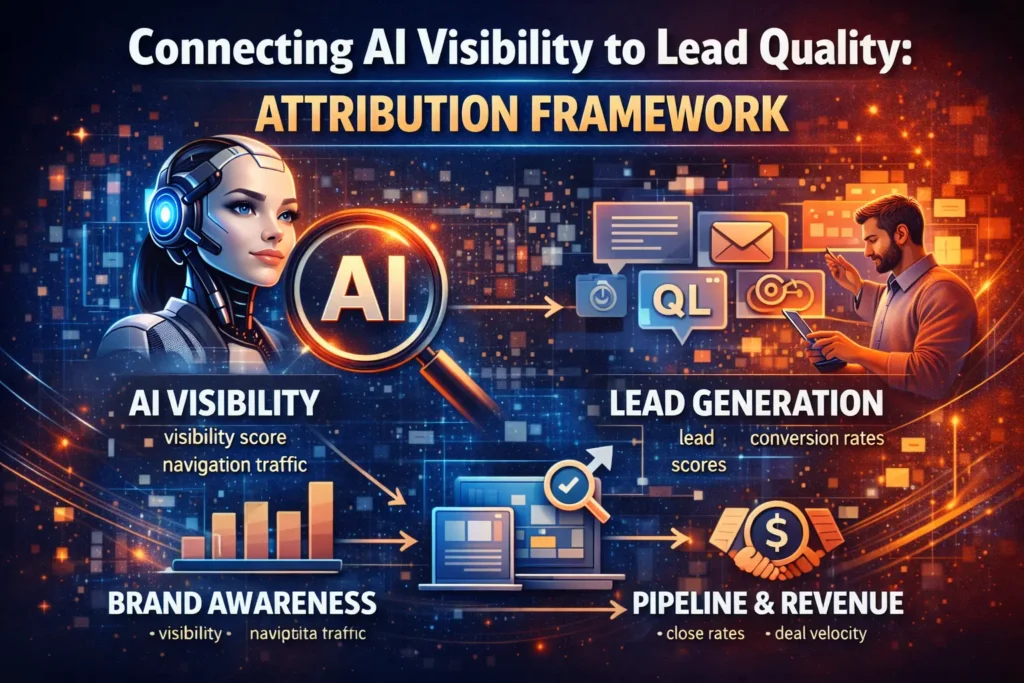
Connecting AI Visibility to Lead Quality: Attribution Framework
Turn mentions into measurable business impact:
Step 1: Establish Baseline Visibility
Actions:
- Audit current visibility across major platforms
- Test 50-100 relevant search queries
- Identify share of voice versus competitors
- Document current sentiment and positioning
Metrics:
- Visibility score (proprietary to each platform)
- Mention frequency
- Average positioning
- Sentiment breakdown
Step 2: Map Visibility to Awareness Metrics
Actions:
- Track branded search volume
- Monitor direct navigation traffic
- Survey brand awareness in target accounts
- Measure consideration set inclusion
Correlations: Strong AI visibility should correlate with increases in these awareness indicators within 30-90 days.
Step 3: Connect to Lead Generation
Actions:
- Integrate visibility data with CRM
- Tag leads from high-visibility periods
- Compare lead quality scores
- Track conversion rates by visibility level
Analysis: Leads generated during high-visibility periods typically show:
- Higher lead scores
- Faster progression through funnel
- Better sales qualification
- Stronger product fit
Step 4: Attribute to Revenue
Actions:
- Track deals where accounts show AI exposure
- Compare close rates
- Analyze deal velocity
- Calculate customer acquisition cost
ROI Calculation: If AI visibility improvements correlate with 10% higher close rates and 20% faster sales cycles, calculate impact on annual revenue and CAC.
Step 5: Optimize Continuously
Actions:
- Test content improvements
- Monitor competitor changes
- Adjust strategy based on data
- Scale what works
Implementation Guide: Getting Started
Step-by-step approach for success:
Week 1: Assessment and Planning
Audit Current State:
- What AI visibility do you have now?
- Where do competitors appear?
- What queries matter most?
- Who needs visibility data?
Define Success:
- What metrics indicate improvement?
- How will you measure lead quality?
- What ROI justifies investment?
Output: Clear requirements document
Week 2: Tool Evaluation
Shortlist Platforms:
- 3-5 tools matching requirements
- Compare pricing at your scale
- Review customer testimonials
- Check integration capabilities
Output: Finalists for trials
Week 3-4: Trials and Testing
Hands-On Evaluation:
- Test core use cases
- Validate data accuracy
- Check integration ease
- Assess support quality
Output: Selected platform with confidence
Week 5-6: Implementation
Deploy and Configure:
- Complete setup
- Integrate with CRM/analytics
- Train team
- Establish reporting cadence
Output: Operational system
Week 7-8: Baseline and Optimization
Establish Metrics:
- Capture current visibility
- Identify quick wins
- Plan content improvements
- Set improvement targets
Output: Strategic roadmap
Month 3+: Scale and Refine
Continuous Improvement:
- Implement optimizations
- Measure impact
- Expand coverage
- Prove ROI
Output: Sustained competitive advantage
Best Practices for AI Visibility Optimization
Proven tactics that improve lead quality:
Practice 1: Focus on High-Intent Queries
Not all visibility equals valuable visibility. Prioritize queries indicating purchase intent or problem awareness.
Example: “best project management software” > “what is project management”
Practice 2: Optimize Cited Content
When AI systems cite specific pages, double down on making that content even better—more comprehensive, more current, more authoritative.
Practice 3: Build Entity Authority
AI systems trust established entities. Invest in:
- Wikipedia presence
- Consistent NAP (name, address, phone)
- Schema markup
- Brand mentions across authoritative sites
Practice 4: Create Citation-Worthy Content
Content AI systems love to cite:
- Original research and data
- Comprehensive guides
- Expert analysis
- Clear, structured information
- Regularly updated resources
Practice 5: Monitor Competitor Mentions
When competitors get cited instead of you, analyze:
- What content are they being cited for?
- What makes their content authoritative?
- What gaps can you fill?
- How can you differentiate?
Practice 6: Test and Iterate
AI systems change constantly. Regular testing reveals what works:
- Weekly prompt testing
- Monthly competitive analysis
- Quarterly strategy refresh
- Annual comprehensive audits
Learn about social media marketing tips for multi-channel visibility.
Common Mistakes to Avoid
Learn from others’ errors:
Mistake 1: Tracking Vanity Metrics
Mentions without context mean nothing. Focus on visibility that drives business outcomes.
Mistake 2: Ignoring Sentiment
Being mentioned negatively damages lead quality. Track how AI describes you, not just frequency.
Mistake 3: Overlooking Attribution
Without connecting visibility to revenue, you cannot prove ROI or make informed investment decisions.
Mistake 4: Narrow Platform Focus
Users fragment across AI platforms. Tracking only ChatGPT misses half the picture.
Mistake 5: Static Optimization
AI systems change constantly. One-time optimization loses effectiveness quickly.
Mistake 6: Neglecting Competitors
Your visibility relative to competitors matters more than absolute numbers.
Mistake 7: Expecting Instant Results
AI visibility improvements take 30-90 days to impact lead generation meaningfully.
Conclusion: AI Visibility as Lead Quality Lever
Over 80% of searches end without clicks. 37% of product discovery starts in AI interfaces. Traditional SEO metrics no longer tell the complete story. The brands winning in 2026 master AI visibility—ensuring they appear in AI-generated answers that shape purchase decisions.
Key Takeaways:
- AI visibility measures brand mentions across ChatGPT, Perplexity, Gemini, AI Overviews, Claude
- 80%+ of searches end without clicks—traditional metrics incomplete
- Gartner forecasts 25% drop in traditional search by end of 2026
- Strong AI visibility correlates with higher lead quality and faster sales cycles
- Best tools provide multi-platform tracking, sentiment analysis, and attribution
- Enterprise platforms cost $500-$5,000 monthly; starter options under $100
- Attribution connecting visibility to revenue is critical for ROI proof
- Optimization takes 30-90 days to impact lead generation
- Citation-worthy content and entity authority drive visibility
What To Do Now:
This Month: Audit current AI visibility, identify major gaps, shortlist 3-5 tools
Next Month: Run trials, select platform, implement baseline tracking
Month 3: Optimize highest-impact content, establish attribution framework
Ongoing: Monitor competitors, test improvements, scale what works
AI visibility is not vanity metric—it is lead quality determinant. Prospects researching solutions see AI-generated answers before visiting websites. If AI systems do not cite your brand, you are invisible to high-intent buyers.
The companies investing in AI visibility tracking and optimization now establish competitive advantages compounding over time. Start today. Every week of invisibility is a week competitors capture mindshare you will never recover.
Your prospects are asking AI assistants for recommendations right now. The question is whether your brand appears in those answers.