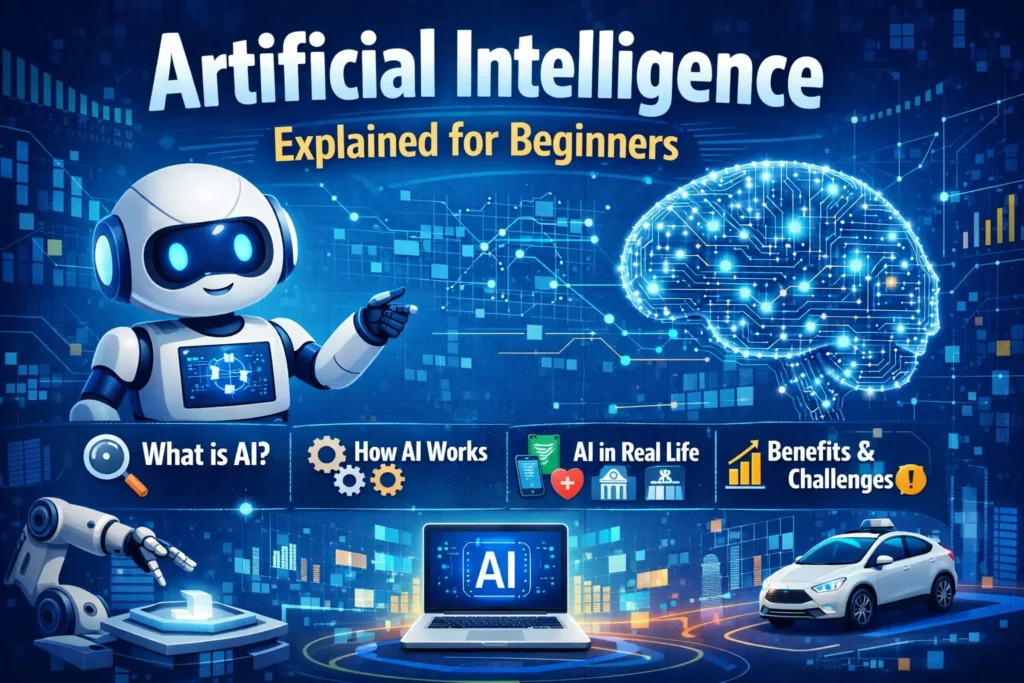
Artificial Intelligence (AI) is one of the most powerful technologies shaping the modern world. From smartphones and search engines to healthcare and finance, artificial intelligence is transforming how systems think, learn, and make decisions. For beginners, understanding AI can seem complex, but the core ideas are simpler than they appear.
This guide explains artificial intelligence for beginners using clear language, practical examples, and real-world applications.
What Is Artificial Intelligence?
Artificial intelligence refers to computer systems designed to perform tasks that normally require human intelligence. These tasks include learning, problem-solving, decision-making, and pattern recognition.
AI systems rely on data, algorithms, and computing power to simulate intelligent behavior. Many modern businesses adopt AI alongside digital tools reviewed in technology tools and software reviews to improve efficiency and accuracy.
According to IBM, AI enables machines to learn from experience, adapt to new inputs, and perform human-like tasks.
How Artificial Intelligence Works
AI works by combining large datasets with algorithms that identify patterns and relationships. The more data an AI system processes, the better it becomes at making predictions or decisions.
Core Components of AI
- Data – the foundation of AI learning
- Algorithms – rules that guide learning and decisions
- Computing power – enables fast processing
These components allow AI systems to improve over time without constant human input.
Types of Artificial Intelligence
AI can be broadly classified into different types based on capabilities.
Narrow AI
Narrow AI performs specific tasks, such as voice assistants, image recognition, and recommendation systems. This is the most common form of AI today.
General AI
General AI refers to systems that can perform any intellectual task a human can. While still theoretical, research continues to advance toward this goal.
Most real-world applications today fall under narrow AI, especially in business automation and digital platforms.
Machine Learning and Deep Learning
Machine learning is a key subset of artificial intelligence. It enables systems to learn from data without being explicitly programmed.
Deep learning uses neural networks inspired by the human brain to process complex data such as images, audio, and text. These technologies power facial recognition, language translation, and self-driving systems.
Businesses often combine AI with insights from SEO and digital marketing to analyze user behavior and optimize online performance.
Real-World Applications of Artificial Intelligence
Artificial intelligence is already part of everyday life.
AI in Business
Companies use AI to automate customer support, analyze data, and improve decision-making. AI also supports growth strategies discussed in how to grow a business from scratch by helping businesses scale efficiently.
AI in Healthcare
AI assists doctors with diagnosis, medical imaging, and personalized treatment plans.
AI in Finance
Banks use AI for fraud detection, risk analysis, and customer service automation, supported by strong financial frameworks similar to those in business finance basics.
According to World Economic Forum, AI adoption is accelerating across industries and reshaping the global workforce.
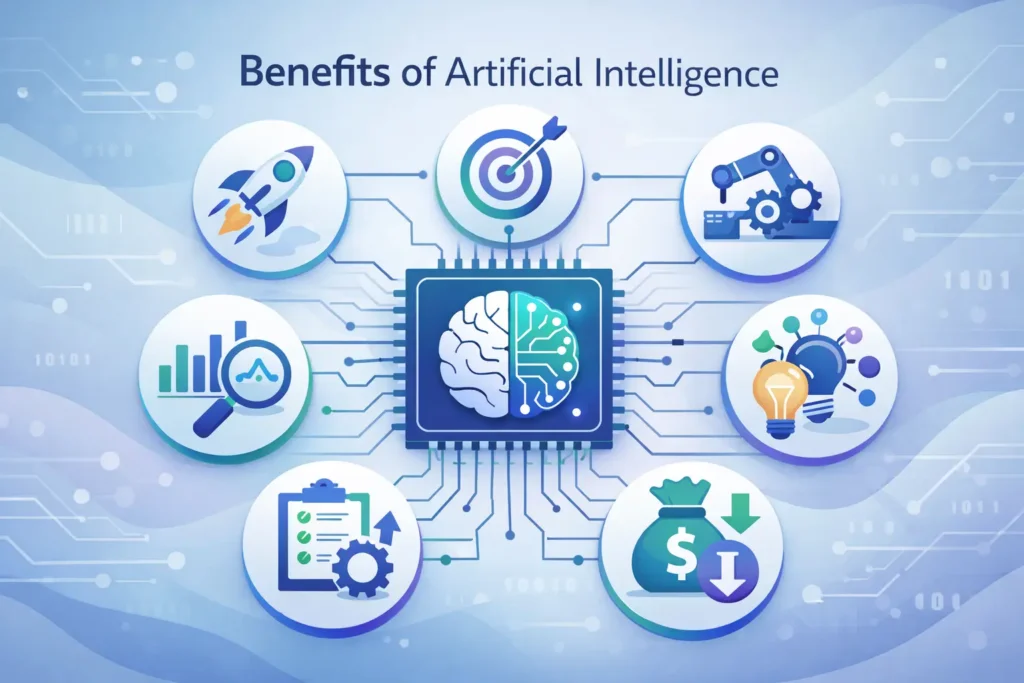
Benefits of Artificial Intelligence
AI offers several advantages:
- Faster data processing
- Improved accuracy
- Automation of repetitive tasks
- Better decision-making
These benefits help organizations save time, reduce costs, and increase productivity.
Challenges and Limitations of AI
Despite its advantages, AI also presents challenges:
- Data privacy concerns
- Bias in algorithms
- High implementation costs
- Dependence on quality data
Addressing these issues responsibly is essential for long-term success.
Artificial Intelligence and the Future
AI will continue to evolve and integrate deeper into daily life. Future advancements may improve education, transportation, healthcare, and sustainability.
Businesses that align AI adoption with clear strategies—similar to structured marketing strategies for business growth will be better positioned to remain competitive.
Frequently Asked Questions
What is artificial intelligence in simple terms?
Artificial intelligence is technology that allows machines to think, learn, and make decisions like humans.
Is AI hard to learn for beginners?
No. Understanding basic concepts is easy with simple explanations and examples.
Where is AI used the most today?
AI is widely used in smartphones, online platforms, healthcare, finance, and business operations.
Is artificial intelligence safe?
AI is safe when developed and used responsibly with proper regulations and ethical standards.
Will AI replace human jobs?
AI may automate some tasks, but it also creates new job opportunities and industries.
Conclusion
Artificial intelligence is no longer a future concept—it is a present reality shaping industries and everyday life. By understanding the basics of AI, beginners can make informed decisions, explore new opportunities, and adapt to a technology-driven world.
Explore more expert insights and beginner-friendly technology articles on Daily Ideal Blogs to stay updated with the latest trends and innovations.