Customers can’t buy from brands they don’t know exist. That obvious truth reveals why brand awareness matters: before consideration, before purchase, before loyalty—there must be recognition.
According to January 2026 research, brand awareness drives the entire sales ecosystem. Higher email open rates, more demo requests, and prospects who enter the funnel already inclined to choose you—all stem from brand recognition. Yet most businesses treat awareness as a vague goal rather than a measurable outcome with specific strategies.
The data proves systematic approaches work. Companies implementing multi-channel brand strategies see 3-6 month visible results with consistent effort. Meanwhile, businesses relying on single tactics or sporadic campaigns struggle to break through market noise.
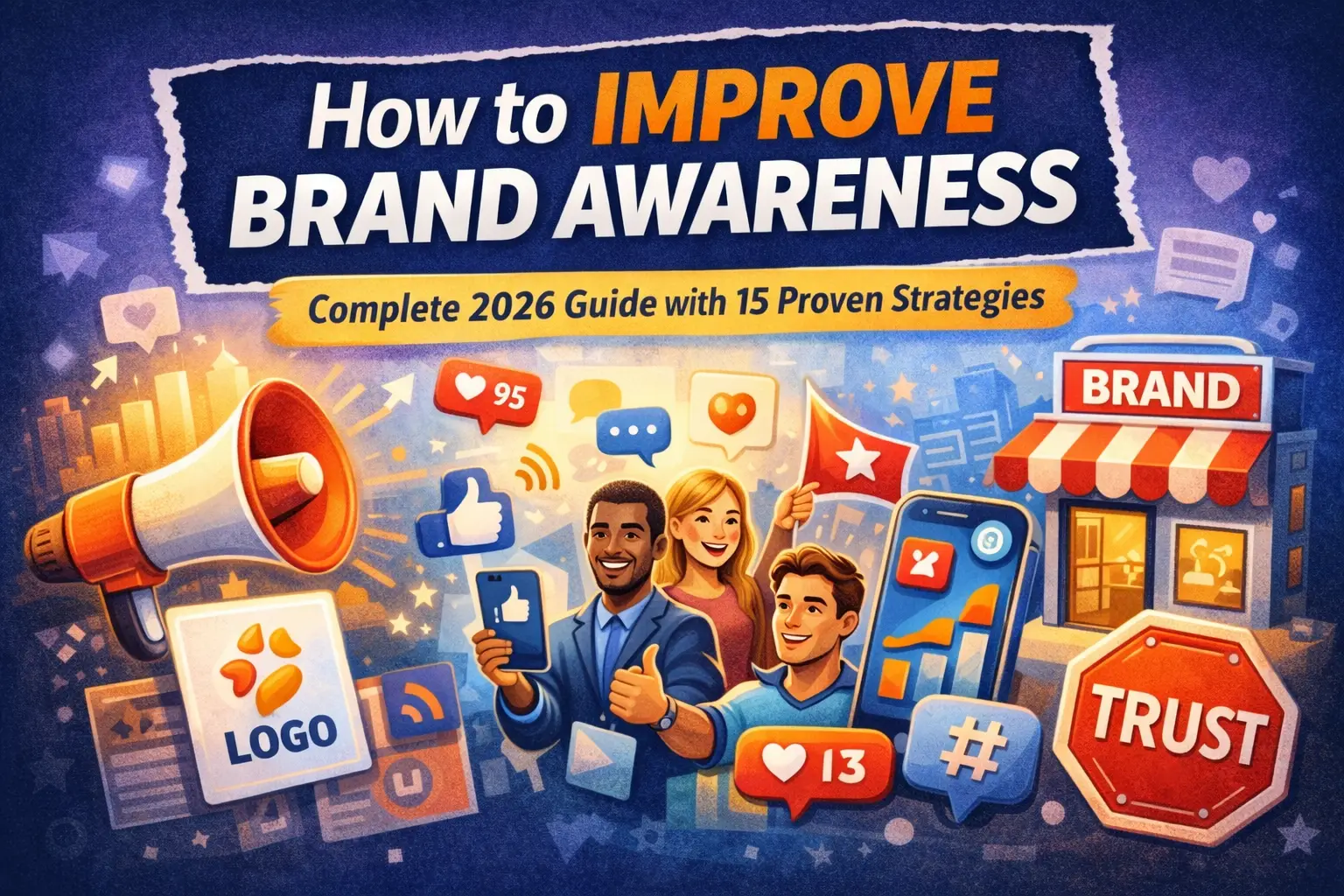
This comprehensive guide presents 15 evidence-based strategies to improve brand awareness in 2026, backed by latest research from Harvard Business School, marketing experts, and industry analysts. You will learn what brand awareness actually is, why it determines business success, proven tactics that work, how to measure progress, and mistakes that waste resources.
Whether you run a startup building recognition from zero or lead established company expanding market position, these strategies transform invisibility into familiarity.
What Is Brand Awareness? (Clear Definition)
Before improving something, understand what it actually means:
Brand Awareness Definition: Brand awareness is the extent to which customers recognize and recall a brand, including its name, logo, products, and other identity elements. It exists on a spectrum from complete unfamiliarity to high-level brand recall and recognition.
Two Key Components:
1. Brand Recognition (Aided Awareness): Customers recognize your brand when they see it. They identify your logo, remember your name when given options, or recall your brand from a list.
2. Brand Recall (Unaided Awareness): Customers think of your brand spontaneously without prompts. When someone needs what you offer, you come to mind first.
Simple Example:
- Recognition: Seeing golden arches and knowing it’s McDonald’s
- Recall: Being hungry and thinking “I want McDonald’s” without seeing any logo
Why the Distinction Matters: Recall is more powerful than recognition. Customers who recall your brand unprompted are further along the purchase journey.
Understanding branding strategies for modern businesses provides foundation for awareness building.
Why Brand Awareness Determines Business Success
Brand awareness is not vanity metric—it drives measurable business outcomes:
Creates Trust Through Familiarity
The Psychology: The “mere exposure effect” means people prefer things they’ve encountered repeatedly, even subconsciously. Frequent brand visibility builds familiarity that feels like trust.
Business Impact: According to research, consistent brand presentation across platforms creates mental shortcut helping buyers feel confident in choices.
Shortens Sales Cycles
The Mechanism: Prospects aware of your brand require less education and convincing. They enter sales conversations already inclined to buy.
The Data: According to Forrester, strong credible brands energize entire sales ecosystems, increasing buyer awareness and improving perceptions even before sales reps engage.
Increases Customer Lifetime Value
How It Works: Brand-aware customers:
- Purchase more frequently
- Try new products from brands they know
- Pay premium prices for familiar brands
- Refer others more often
Provides Competitive Buffer
The Advantage: When customers know your brand, competitors must work harder to steal attention. Brand awareness creates defensive moat around market position.
Enables Organic Growth
The Compounding Effect: Strong brand awareness generates word-of-mouth referrals, media coverage, and social sharing—free marketing that compounds over time.
Learn about marketing for business growth that leverages brand awareness.
15 Proven Strategies to Improve Brand Awareness in 2026
Based on latest research and expert analysis:
Strategy 1: Build Strong Visual Identity
What It Means: Create distinctive, consistent visual elements—logo, colors, typography, imagery style—that make your brand instantly recognizable.
Why It Works: According to research, when every touchpoint looks and sounds consistent, customers find it easier to connect with the brand.
Action Steps:
- Design Professional Logo: Simple, scalable, memorable
- Choose Brand Colors: 2-3 primary colors used consistently
- Select Typography: Fonts that reflect brand personality
- Create Visual Guidelines: Document exactly how to use brand elements
- Apply Consistently: Use same visual identity across all platforms
2026 Insight: AI tools now enable rapid creation of dynamic brand assets. However, consistency still matters more than variety. Establish core identity first.
Strategy 2: Develop Clear Brand Voice
What It Means: Define how your brand communicates—tone, language style, personality—and maintain it across all content.
Action Steps:
- Define Personality Traits: Professional, friendly, bold, playful?
- Create Voice Guidelines: Document tone for different situations
- Train Team: Ensure everyone communicates consistently
- Review Content: Check that messaging aligns with voice
- Evolve Thoughtfully: Adjust over time without losing core identity
Example: Think of your brand as person attending different events. While behavior adjusts slightly for context, fundamental personality remains consistent.
Strategy 3: Create Valuable Content Consistently
Why It Works: According to Content Marketing Institute, 87% of B2B marketers improved brand awareness through captivating content creation.
Content Benefits:
- Attracts people searching for solutions
- Positions brand as thought leader
- Increases visibility through organic traffic
- Strengthens loyalty through value delivery
Content Mix Strategy: Combine multiple formats:
- Blog posts (comprehensive guides, how-tos)
- Videos (tutorials, behind-the-scenes, product demos)
- Podcasts (interviews, discussions)
- Infographics (visual data, processes)
- Email newsletters (curated insights)
- Social media posts (quick tips, engagement)
Publishing Cadence: Consistent publishing builds trust and predictability. Set realistic schedule you can maintain long-term.
Strategy 4: Optimize for Search Engines (SEO)
Why It Matters: People search online before making decisions. Brands must appear when these searches happen.
SEO Actions:
- Keyword Research: Find terms your audience searches
- Optimize On-Page: Improve site structure, meta tags, content
- Build Backlinks: Earn links from authoritative sites
- Create Quality Content: Comprehensive resources that rank
- Monitor Performance: Track rankings, traffic, conversions
2026 Focus: With AI search growing, optimize for conversational queries and ensure brand appears in AI-generated answers.
Learn about entity-based SEO optimization for modern visibility.
Strategy 5: Leverage Social Media Strategically
Why It Works: Social platforms keep brands present in people’s daily lives through short videos, polls, stories, and interactive posts.
Platform Strategy:
- Don’t be everywhere: Focus on 2-3 platforms where your audience actually is
- Post consistently: Regular presence beats sporadic activity
- Engage actively: Respond to comments, participate in conversations
- Use platform features: Stories, Reels, Lives, polls—native features get priority
- Share behind-the-scenes: Humanize your brand with authentic content
Content Types:
- Educational tips
- Customer success stories
- Product demonstrations
- Team spotlights
- Industry insights
Strategy 6: Implement Employee Advocacy Program
Why It Works: Audiences trust people more than faceless brands. Employees extend reach at minimal cost.
How to Activate:
- Make Sharing Easy: Provide ready-to-post content
- Give Guidelines: Clear boundaries on what to share
- Celebrate Participation: Recognize employees who advocate
- Enable Choice: Make advocacy voluntary, not mandatory
- Share Success: Show team impact of their efforts
The Multiplier Effect: If 50 employees each share with 200 followers, that’s 10,000 potential impressions—reach impossible with company account alone.
Strategy 7: Create Strategic Partnerships
What It Means: Co-marketing with complementary businesses to share audiences without competing.
Why It Works: Strategic co-branding initiatives exponentially expand brand reach and create unique value propositions. Key is finding partners whose values and audience align while offering complementary benefits.
Partnership Examples:
- Joint Content: Co-create webinars, guides, research
- Bundled Offers: Package products/services together
- Cross-Promotion: Feature each other in newsletters, social media
- Event Co-hosting: Share costs and audiences
- Product Integration: Integrate complementary solutions
Famous Example: Spotify’s partnership with Starbucks created unique in-store music experience enhancing customer engagement for both brands.
Strategy 8: Guest Post on Relevant Platforms
Why It Works: Publishing insights on established platforms introduces your brand to existing audiences. When your content solves real problems, readers associate your brand with expertise.
How to Do It:
- Identify Target Publications: Industry blogs, trade publications, media sites
- Research Topics: What does their audience want to know?
- Pitch Ideas: Offer unique angles and value
- Deliver Quality: Exceed expectations with depth and insights
- Include Author Bio: Link back to your site with context
Long-Term Benefits: Consistent guest contributions strengthen credibility, improve referral traffic, and create lasting visibility beyond your own channels.
Strategy 9: Invest in Paid Advertising
Why Consider Paid: Especially in beginning, paid ads jumpstart visibility while building organic strategies.
Effective Channels:
- Google Ads: Capture high-intent searches
- Social Media Ads: Reach specific demographics
- Display Advertising: Build awareness through repetition
- Sponsored Content: Native ads in relevant publications
- Retargeting: Re-engage website visitors
Budget Approach: Start small, test what works, scale successful campaigns. Track cost per impression and brand lift metrics.
Strategy 10: Encourage User-Generated Content (UGC)
Why It Works: People trust real experiences from other users. Reviews, testimonials, photos, and social posts form strong social proof.
How to Generate UGC:
- Create Branded Hashtags: Make sharing easy to track
- Run Contests: Incentivize content creation
- Feature Customers: Highlight user content on your channels
- Request Reviews: Ask satisfied customers to share experiences
- Make Sharing Easy: Provide tools, templates, or frameworks
The Trust Factor: Highlighting customer content on websites or social platforms strengthens trust more than brand-created marketing.
Strategy 11: Sponsor Local Events or Causes
Why It Works: For local or service brands, partnerships and sponsorships improve exposure within target communities.
Sponsorship Options:
- Community events
- Sports teams
- Charity initiatives
- Industry conferences
- Educational programs
Benefits Beyond Visibility:
- Positive brand association
- Networking opportunities
- Community goodwill
- Media coverage
- Speaking opportunities
Strategy 12: Leverage Influencer Partnerships
The Evolution: Modern partnerships focus on authentic storytelling and genuine brand integration. Shift from one-off posts toward long-term partnerships where influencers become genuine brand advocates.
How to Approach:
- Find Aligned Influencers: Values and audience match matter most
- Build Relationships: Long-term partnerships outperform one-offs
- Give Creative Freedom: Authenticity requires trust
- Track Impact: Monitor referral traffic, engagement, conversions
- Focus on Micro-Influencers: Often better engagement than mega-influencers
Example: Nike partners with athletes not just for endorsements, but to co-create products and tell compelling stories. This deeper collaboration resonates authentically.
Strategy 13: Build Community Around Your Brand
What It Means: Create platforms where customers connect not just with brand, but with each other. Transform passive consumers into active brand advocates.
Community Building Tactics:
- Private Groups: Facebook Groups, Slack channels, Discord servers
- Forums: Dedicated discussion boards
- Events: Virtual or in-person gatherings
- User Conferences: Annual meetups for customers
- Ambassador Programs: Recognize and empower superfans
The Compounding Effect: Communities generate organic awareness as members naturally spread word through their networks.
Strategy 14: Create Shareable Cornerstone Content
What It Is: Comprehensive resources others cite and link to—”2026 Industry Trends” reports, ultimate guides, original research.
Why It Works: According to analysis, cornerstone content amplifies brand reach as others reference and share it.
Examples:
- Original research with data insights
- Comprehensive industry guides
- Tools and calculators
- Annual benchmark reports
- Template libraries
Distribution: Promote heavily, make easily shareable, pitch to media, and update annually to maintain relevance.
Strategy 15: Maintain Absolute Consistency
The Foundation: According to multiple sources, consistency is THE cornerstone of effective awareness building.
What Consistency Means:
- Same visual identity everywhere
- Same brand voice across platforms
- Same core messages repeatedly
- Same quality standards consistently
- Same values demonstrated through actions
Why It Works: Inconsistency confuses audiences. Saying one thing on Instagram and another on website prevents recognition. Consistent brands become familiar faster.
The Long Game: Brand awareness is long-term process built day by day, consequently. Focus on few high-impact tactics and maintain consistent messaging across platforms.
How to Measure Brand Awareness
Measurement turns abstract concept into tangible metrics you can track and improve:
Quantitative Metrics
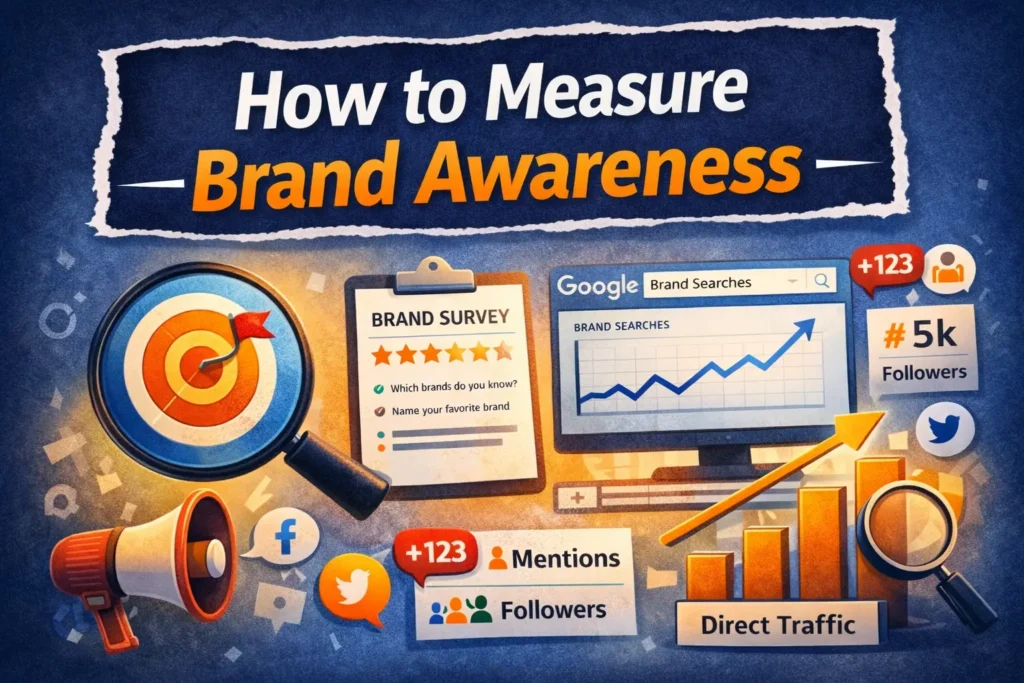
Direct Traffic: When users type website URL directly into browser, it shows strong brand recall. They didn’t need search engine or social link.
Branded Search Volume: Tools like Google Trends track how many people specifically search your brand name. Rising trend signals growing awareness.
Social Media Metrics:
- Follower growth rate
- Mentions and tags
- Share of voice vs. competitors
- Engagement rates
Reach Metrics:
- Impressions across channels
- Audience size
- Geographic spread
Qualitative Metrics
Brand Recall Surveys: Ask “What brands come to mind when you think of [category]?” Unaided recall is gold standard.
Brand Recognition Tests: Show logo or name and ask if recognized. Measure percentage who know you.
Sentiment Analysis: Track how people talk about your brand—positive, neutral, or negative.
Customer Feedback: Ask new customers how they heard about you. Track answers over time.
Key Performance Indicators
Track These Monthly:
- Direct traffic trends
- Branded search volume
- Social media reach and engagement
- Website traffic sources
- Customer acquisition source attribution
Quarterly Deep Dives:
- Brand awareness surveys
- Competitor share of voice
- Media mentions and PR value
- Customer sentiment analysis
Common Brand Awareness Mistakes to Avoid
Learn from others’ errors:
Mistake 1: Inconsistent Branding
Using different logos, colors, or messaging across platforms confuses audiences and prevents recognition.
Mistake 2: Chasing Every Platform
Being mediocre everywhere beats being invisible, but excellence on 2-3 platforms beats mediocrity on 10.
Mistake 3: Focusing Only on Reach
Impressions don’t equal awareness. Meaningful engagement with right audience matters more than vanity metrics.
Mistake 4: Expecting Instant Results
Brand awareness takes time. With consistent effort, noticeable results show in 3-6 months according to research.
Mistake 5: Neglecting Measurement
“Just like annual checkups with doctor, brand managers must periodically check brand health” according to Harvard research.
Mistake 6: Sacrificing Authenticity for Trends
Jumping on every trend dilutes brand identity. Stay true to core values while being culturally relevant.
Mistake 7: One-Off Campaigns
Single campaigns create temporary spikes. Sustainable awareness requires ongoing commitment.
Timeline: When to Expect Results
Realistic expectations prevent premature abandonment:
Month 1-3: Foundation Phase
- Establish visual identity and voice
- Create initial content library
- Set up measurement systems
- Begin consistent publishing
- Early awareness among existing network
Month 3-6: Traction Phase
- Noticeable increase in branded searches
- Growing social media engagement
- First media mentions or backlinks
- Improved direct traffic
- Customer recognition comments
Month 6-12: Growth Phase
- Measurable brand recall improvement
- Increased share of voice
- Organic mentions and discussions
- Higher quality leads
- Demonstrable ROI
Year 2+: Compound Phase
- Established brand presence
- Reduced customer acquisition cost
- Premium pricing ability
- Strong word-of-mouth
- Sustainable competitive advantage
Conclusion: Build Brand Awareness Systematically
Brand awareness is not luck—it’s systematic execution of proven strategies over time. Customers can’t buy from brands they don’t know, making awareness the foundation of all business growth.
Key Takeaways:
- Brand awareness exists on spectrum from unfamiliarity to spontaneous recall
- Recognition (aided) vs. recall (unaided) both matter, but recall is more powerful
- Consistency across channels is THE cornerstone of effective awareness building
- Focus on few high-impact tactics executed flawlessly beats scattered efforts
- Measure meaningful metrics: unaided recall, share of voice, direct traffic
- Content should provide value and be shareable to amplify reach
- Employee advocacy and partnerships extend visibility without major budget increases
- Results typically show in 3-6 months with consistent effort
- Long-term awareness comes from building relationships and delivering value
What To Do Now:
Choose 3-5 strategies from this guide that align with your resources and audience. Implement them consistently for at least 6 months. Measure progress monthly. Adjust tactics based on data. Scale what works.
The Bottom Line:
Brand awareness isn’t about flashy one-time campaigns. It’s about showing up so often and so clearly that people know you without thinking. The brands that succeed combine consistency, creativity, and value—making themselves impossible to ignore and easy to remember.
For comprehensive marketing guidance, read our guides on how to build a strong marketing plan and what is marketing.
Start building brand awareness today. Your future customers are waiting to discover you.