
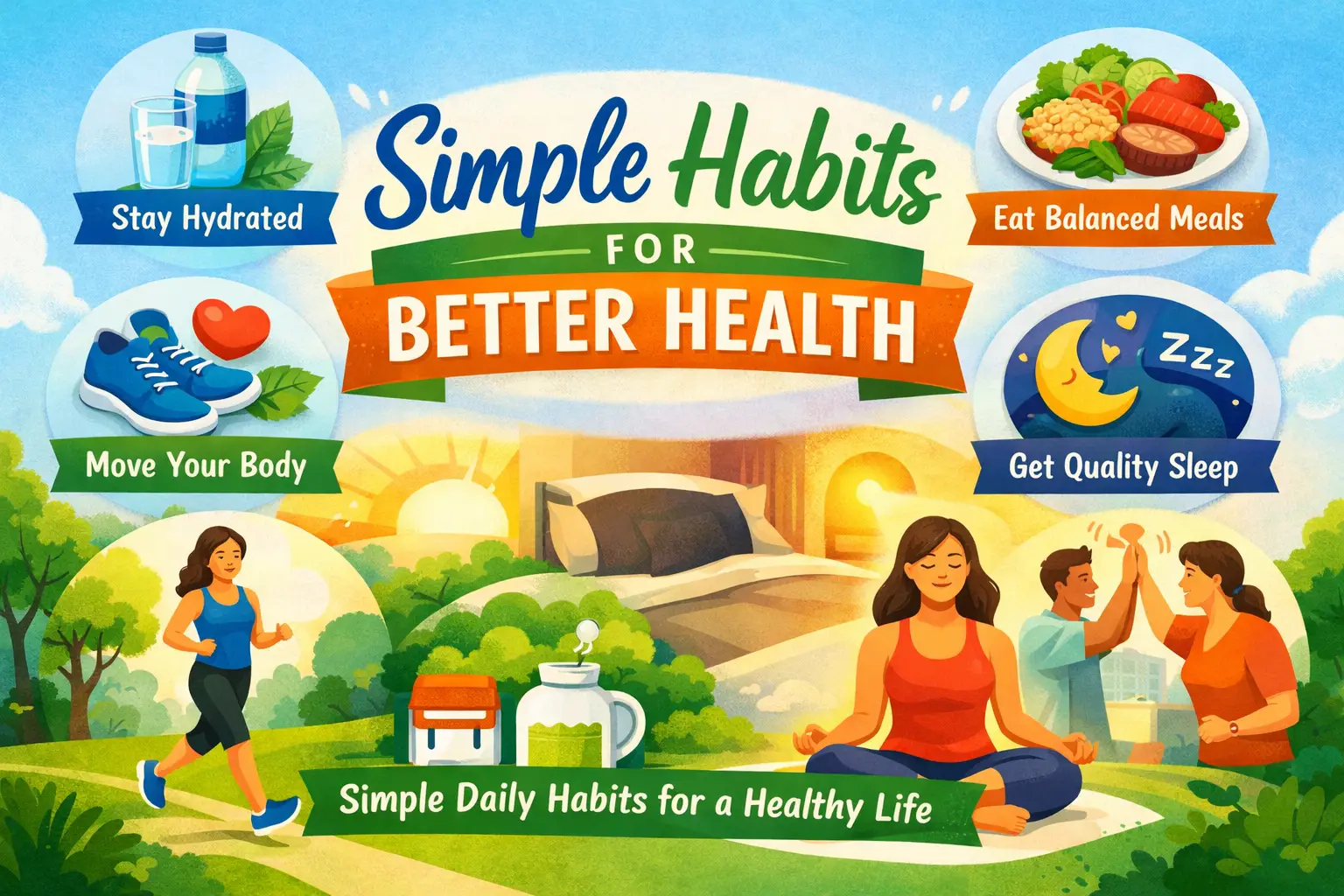
Living a healthy life doesn’t require extreme diets or intense workout routines. In reality, simple habits for better health practiced consistently can lead to long-term physical and mental wellbeing. Small lifestyle changes, when repeated daily, create powerful results over time.
In today’s fast-paced world, focusing on healthy habits, daily wellness, and balanced living is more important than ever. This guide breaks down easy, realistic habits anyone can adopt to improve overall health.
Why Simple Healthy Habits Matter
Many people believe health improvement requires major lifestyle overhauls. The truth is, daily habits play a far bigger role than occasional big efforts. Simple actions like staying hydrated, eating balanced meals, and moving your body regularly can:
- Improve energy levels
- Strengthen immunity
- Support mental health
- Reduce long-term health risks
According to the World Health Organization, lifestyle habits are among the biggest factors influencing overall health and disease prevention .
Start Your Day with Healthy Morning Habits
Your morning routine sets the tone for the entire day. Developing healthy morning habits can improve focus, mood, and productivity.
Wake Up and Hydrate
Drinking water after waking up helps kick-start metabolism and supports digestion. Hydration is a core part of daily healthy habits and overall wellness.
Get Natural Light
Exposure to sunlight early in the day helps regulate sleep cycles and boosts mood. Even 10–15 minutes outside can make a difference.
Practice Mindfulness
Simple breathing exercises or light stretching reduce stress and prepare your mind for the day ahead.
Eat Balanced Meals for Daily Health
Healthy eating doesn’t mean strict dieting. It’s about balance, consistency, and smarter food choices.
Focus on Whole Foods
A diet rich in fruits, vegetables, whole grains, and lean proteins supports healthy daily living and long-term wellbeing.
Control Portion Sizes
Overeating, even healthy food, can affect digestion and energy. Listening to hunger cues is a key part of a balanced lifestyle.
Reduce Processed Foods
Limiting sugar and processed foods helps maintain stable energy levels and supports heart health, as supported by CDC nutrition guidelines .
For a deeper understanding of building sustainable wellness routines, this guide on healthy habits for long-term wellbeing explains how small dietary changes create lasting results.
Move Your Body Every Day
Physical activity is essential for both physical and mental health. You don’t need a gym membership to stay active.
Choose Simple Exercises
Walking, stretching, yoga, or light home workouts all count as effective healthy routines.
Stay Consistent
Even 20–30 minutes of daily movement improves circulation, muscle strength, and mood.
Reduce Sitting Time
Long periods of sitting can negatively affect posture and metabolism. Taking short movement breaks supports daily wellness and productivity.
Harvard Health confirms that regular physical activity lowers the risk of chronic disease and improves mental health .
Improve Sleep for Better Overall Health
Quality sleep is one of the most overlooked healthy habits. Poor sleep affects immunity, focus, and emotional balance.
Maintain a Sleep Schedule
Going to bed and waking up at the same time daily supports a healthy sleep cycle.
Limit Screen Time
Reducing phone and screen use before bed improves sleep quality and relaxation.
Create a Calm Environment
A dark, quiet, and comfortable room promotes deeper rest and better recovery.
The National Sleep Foundation emphasizes sleep as a foundation of long-term health and wellness .

Manage Stress with Simple Daily Practices
Chronic stress can harm both mental and physical health. Simple stress-management habits can make a big difference.
Practice Deep Breathing
Just a few minutes of slow breathing helps lower stress hormones and calm the nervous system.
Stay Organized
Planning your day reduces mental clutter and improves focus.
Take Breaks
Short breaks throughout the day help prevent burnout and support emotional balance.
Stress management plays a major role in maintaining healthy daily living, according to mental health research from Mayo Clinic .
Build Healthy Social Connections
Strong relationships are essential for emotional wellbeing. Social interaction supports mental health and longevity.
Stay Connected
Regular communication with friends and family helps reduce stress and feelings of isolation.
Engage in Positive Activities
Shared hobbies and meaningful conversations strengthen emotional health.
Research shows that social connection improves mental health and overall life satisfaction, making it a key part of a balanced lifestyle.
Make Small Changes for Long-Term Results
Health improvement is not about perfection—it’s about consistency. Adopting simple lifestyle changes gradually leads to sustainable success.
Final Thoughts
Developing simple habits for better health is one of the most powerful investments you can make in your life. By focusing on hydration, balanced nutrition, daily movement, quality sleep, and stress management, you build a strong foundation for long-term wellbeing.
Start small, stay consistent, and remember—healthy living is a journey, not a destination.