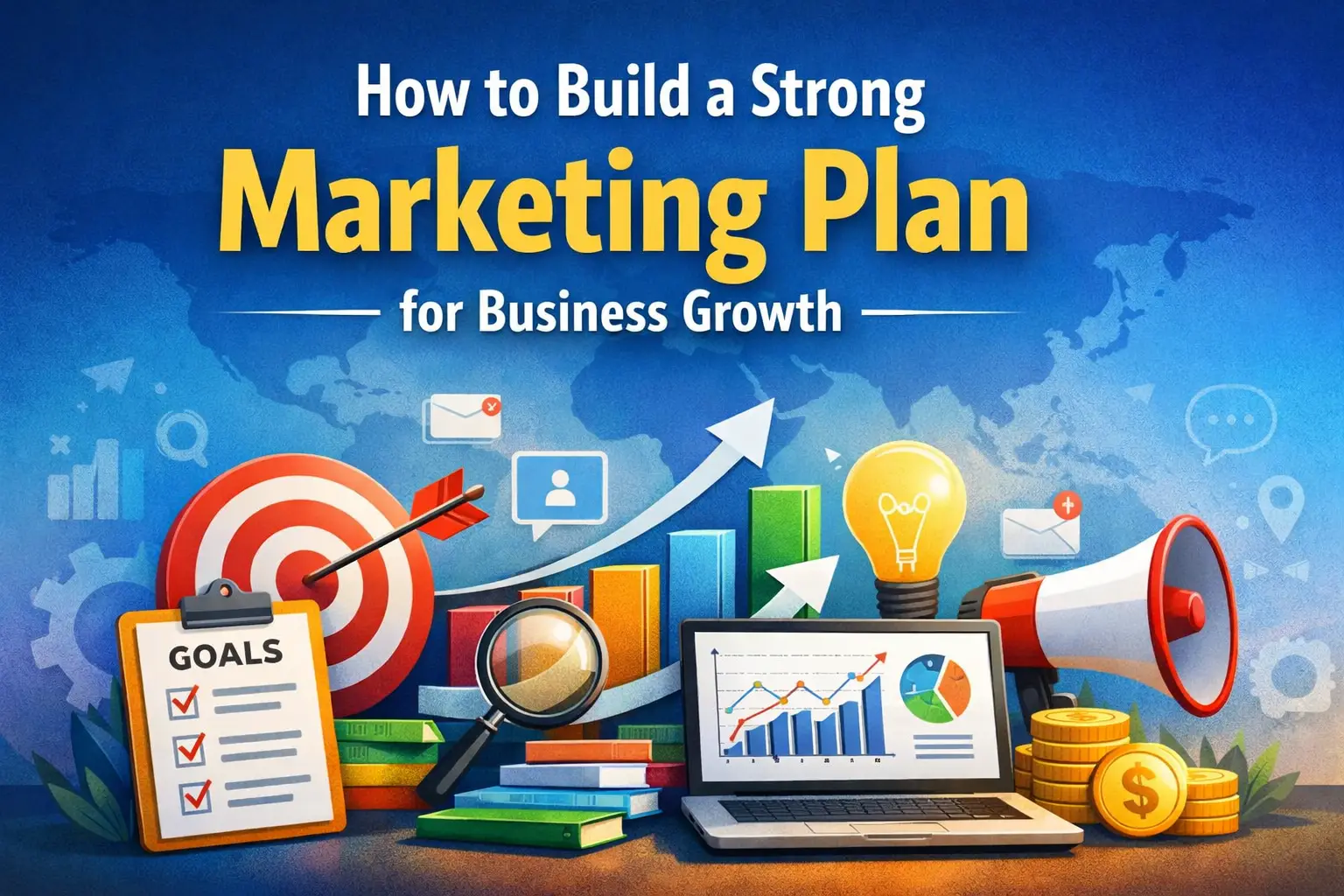
Knowing how to build a strong marketing plan is essential for any business that wants consistent growth and clear direction. A marketing plan acts as a roadmap that outlines how you attract customers, communicate value, and achieve business goals.
Without a structured plan, marketing efforts often become scattered and ineffective.
What Is a Marketing Plan?
A marketing plan is a documented strategy that defines your target audience, marketing goals, channels, budget, and performance metrics. It helps businesses stay focused and measure what actually works.
Companies that align marketing planning with broader business growth strategies tend to achieve more predictable and sustainable results over time.
Define Clear Marketing Goals
Every strong marketing plan starts with clear and measurable goals. These goals guide your decisions and help you track progress.
Common marketing goals include:
- Increasing brand awareness
- Generating qualified leads
- Boosting sales
- Improving customer retention
Goals should always support long-term business objectives rather than short-term wins.
Understand Your Target Audience
Knowing your audience allows you to create messages that resonate and convert. Businesses that deeply understand customer needs often outperform competitors.
Audience research includes:
- Demographics and interests
- Buying behavior
- Pain points and motivations
This understanding becomes even more powerful when combined with proven marketing strategies for business growth that focus on customer-centric messaging and positioning.
Choose the Right Marketing Channels
Not every platform works for every business. A strong marketing plan identifies the channels where your audience is most active.
Popular channels include:
- Search engines
- Social media platforms
- Email marketing
- Content marketing
Businesses that rely on organic visibility often benefit from understanding https://dailyidealblogs.com/how-search-engine-optimization-works/ which helps attract long-term traffic without ongoing ad spend.
Google explains that consistent, helpful content improves visibility and trust in its official guide on how search works.
Create a Clear Content Strategy
Content is the foundation of modern marketing. A strong plan outlines what type of content you’ll create, how often you’ll publish, and what topics matter most to your audience.
Effective content strategies focus on:
- Educational blog posts
- Helpful guides
- Problem-solving resources
Businesses often streamline content creation and execution by using modern business productivity tools, which help teams manage campaigns more efficiently.
Set a Realistic Marketing Budget
A marketing plan should clearly define how much you’re willing to invest. Budgeting helps prioritize channels and avoid overspending.
Your budget should account for:
- Advertising costs
- Tools and software
- Content creation
- Testing and optimization
Forbes highlights that businesses with structured marketing budgets tend to see higher returns and better performance tracking.

Measure Performance and Optimize
Tracking performance ensures your marketing plan stays effective. Data helps identify what works and what needs improvement.
Key metrics to monitor include:
- Website traffic
- Conversion rates
- Lead quality
- Customer acquisition cost
Marketing optimization often improves when businesses adopt insights from evolving technology trends shaping the future, where data-driven decision-making plays a major role (https://dailyidealblogs.com/category/technology/).
According to HubSpot, marketers who track and analyze performance data are more likely to achieve consistent growth.
Align Marketing With Overall Business Strategy
Marketing should never operate in isolation. A strong marketing plan aligns with sales, finance, and operations to support long-term success.
When marketing supports clear business objectives, it becomes a growth engine rather than an expense.
Common Marketing Planning Mistakes to Avoid
- Setting vague or unrealistic goals
- Ignoring audience research
- Spreading efforts across too many channels
- Failing to track results
- Avoiding adjustments based on data
Avoiding these mistakes keeps your marketing plan effective and adaptable.
Conclusion
Learning how to build a strong marketing plan helps businesses stay focused, competitive, and growth-oriented. By setting clear goals, understanding your audience, choosing the right channels, and measuring performance, businesses can create marketing strategies that deliver long-term value.
A strong marketing plan isn’t static—it evolves with your business and market conditions.
Explore more insightful articles on Daily Ideal Blogs for the latest updates and expert insights.