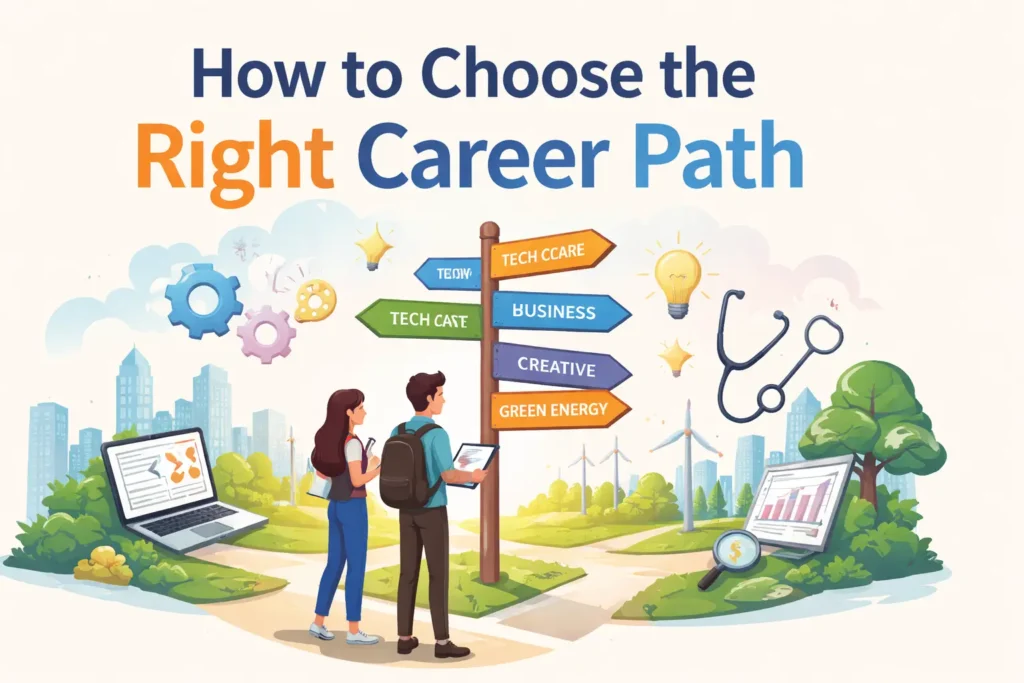
Choosing a career is one of the biggest decisions you will ever make. The career you pick affects your happiness, income, lifestyle, and even your health. But with thousands of jobs to choose from, how do you find the right one for you?
This guide will help you make the best career choice. Whether you are a student deciding what to study, a graduate looking for your first job, or someone wanting to change careers, this article has the answers you need.
By the end, you will understand how to match your personality with the right career, discover high-paying options, and learn about the most in-demand jobs in 2026.
Why Career Choice Matters More Than Ever
Your career takes up about one-third of your adult life. That is roughly 90,000 hours over your lifetime. If you choose wrong, those hours will feel like torture. If you choose right, work becomes something you actually enjoy.
In 2026, the job market is changing faster than ever before. Technology, especially artificial intelligence, is creating new jobs while making some old jobs disappear. According to recent research, AI and automation will create 170 million new jobs by 2030, but will also displace 92 million other jobs.
This means choosing the right career path now is more important than ever. You need a career that will still be valuable in the future and matches what you naturally do well.
Understanding how AI is changing marketing and other industries helps you see where opportunities are growing.
How to Choose a Career: The Step-by-Step Process
Let us break down career decision making into clear steps anyone can follow:
Step 1: Understand Yourself First
Before looking at specific jobs, you need to understand yourself. Most people skip this step and end up in careers that make them miserable.
Ask Yourself These Questions:
- What activities make you lose track of time?
- What subjects did you enjoy most in school?
- Do you prefer working with people, data, things, or ideas?
- Do you like routine or variety?
- Do you work better alone or in teams?
- What are your natural strengths?
Write down your answers. They will guide your entire career search.
Step 2: Take a Career Assessment Test
Career assessment tests help you discover careers that match your personality. These tests are based on psychology research and can reveal jobs you never considered.
Popular Free Career Tests:
- CareerFitter: Takes 3-9 minutes, gives you a work personality assessment
- Truity Career Personality Profiler: 15 minutes, based on Holland Code and Big Five theories
- Career Explorer: 30 minutes, uses machine learning to match you with 1,500+ careers
- 123Test Career Test: Quick and free, based on Holland RIASEC model
- Princeton Review Career Quiz: 24 questions, simple and fast
These tests measure your interests, values, and personality traits. They then show you careers where people like you succeed and feel happy.
The best part? Most of these career assessment tests are completely free. Take two or three different tests to see if they give similar results.
Step 3: Research Career Options Based on Your Personality
Now that you know your personality type, let us look at careers that match different personalities.
Career Path for Introverts
If you are an introvert, you get energy from alone time. You prefer deep conversations over small talk and think before you speak.
Best Careers for Introverts:
- Software Developer: Write code alone or with a small team
- Data Analyst: Work with numbers and patterns
- Writer/Content Creator: Express ideas through writing
- Graphic Designer: Create visual content independently
- Accountant: Focus on detailed financial work
- Research Scientist: Deep work in labs or studies
- Librarian: Help people in a quiet environment
- Web Developer: Build websites and applications
- Editor: Review and improve written content
- Animator: Create animations independently
These jobs let you work independently and do not require constant social interaction.
Career Path for Creative People
Creative people think differently. They come up with new ideas, love artistic expression, and get bored with routine.
Best Careers for Creative People:
- UI/UX Designer: Design how apps and websites look and work
- Video Editor: Tell stories through video
- Photographer: Capture moments and create art
- Marketing Specialist: Create campaigns that stand out
- Interior Designer: Design beautiful spaces
- Music Producer: Create and edit music
- Fashion Designer: Design clothing and accessories
- Game Designer: Create video games
- Art Director: Lead creative teams
- Copywriter: Write creative advertising
Creative careers let you express yourself and make something new every day.
How to Select a Career Based on Personality
Your personality type affects which careers will make you happy. Here is a simple guide:
If You Are Outgoing (Extrovert):
- Sales Representative
- Teacher
- Event Planner
- Human Resource Manager
- Public Relations Specialist
If You Like Helping Others:
- Nurse
- Social Worker
- Counselor
- Physical Therapist
- Special Education Teacher
If You Love Problem-Solving:
- Engineer
- Computer Programmer
- Financial Analyst
- Detective
- Management Consultant
If You Are Detail-Oriented:
- Quality Assurance Specialist
- Data Entry Specialist
- Legal Assistant
- Medical Lab Technician
- Bookkeeper
If You Like Leadership:
- Business Manager
- Project Manager
- Entrepreneur
- School Principal
- Department Head
Understanding your personality helps you avoid careers where you would feel uncomfortable or unhappy.
High-Paying Career Options in 2026
Money is not everything, but it matters. Here are careers that pay well:
Technology Careers (High Pay)
Software Developer
- Average Salary: $110,000-$150,000 per year
- What They Do: Create apps, websites, and software programs
- Education Needed: Bachelor’s degree in Computer Science or coding bootcamp
AI Engineer
- Average Salary: $120,000-$180,000 per year
- What They Do: Build artificial intelligence systems
- Education Needed: Master’s degree in AI, Machine Learning, or related field
Cybersecurity Specialist
- Average Salary: $100,000-$140,000 per year
- What They Do: Protect computer systems from hackers
- Education Needed: Bachelor’s degree in Cybersecurity or IT
Data Scientist
- Average Salary: $115,000-$160,000 per year
- What They Do: Analyze large amounts of data to find patterns
- Education Needed: Bachelor’s or Master’s degree in Data Science, Statistics, or Computer Science
Cloud Computing Expert
- Average Salary: $105,000-$145,000 per year
- What They Do: Manage cloud infrastructure and services
- Education Needed: Bachelor’s degree plus cloud certifications (AWS, Azure, Google Cloud)
Technology jobs are in high demand and pay well. Many companies cannot find enough qualified candidates.
Healthcare Careers (High Pay)
Doctor (Physician)
- Average Salary: $200,000-$400,000 per year
- What They Do: Diagnose and treat illnesses
- Education Needed: Medical degree (8+ years of education)
Nurse Practitioner
- Average Salary: $110,000-$130,000 per year
- What They Do: Provide advanced nursing care, can prescribe medicine
- Education Needed: Master’s degree in Nursing
Pharmacist
- Average Salary: $125,000-$140,000 per year
- What They Do: Dispense medications and advise patients
- Education Needed: Doctor of Pharmacy degree
Dentist
- Average Salary: $160,000-$200,000 per year
- What They Do: Care for teeth and oral health
- Education Needed: Dental school (8 years total education)
Healthcare will always need workers because people always need medical care.
Business Careers (High Pay)
Financial Analyst
- Average Salary: $85,000-$120,000 per year
- What They Do: Help companies make smart money decisions
- Education Needed: Bachelor’s degree in Finance or Business
Management Consultant
- Average Salary: $95,000-$150,000 per year
- What They Do: Help businesses solve problems and improve
- Education Needed: Bachelor’s or Master’s degree in Business
Digital Marketing Manager
- Average Salary: $75,000-$120,000 per year
- What They Do: Lead online marketing campaigns
- Education Needed: Bachelor’s degree in Marketing or related field
Many business careers pay well and offer room for advancement. Learning about marketing for business growth can help you understand this field better.
In-Demand Jobs 2026: Where the Opportunities Are
According to recent data from the Bureau of Labor Statistics and major hiring platforms, these are the most in-demand jobs in 2026:
Top 10 In-Demand Jobs
1. Home Health Aide
- Growth: Adding 72,000+ new jobs
- Why In-Demand: Aging population needs care
- Education: Short training programs
2. Software Developer
- Growth: Growing twice as fast as average jobs
- Why In-Demand: Every company needs technology
- Education: Bachelor’s degree or bootcamp
3. Nurse Practitioner
- Growth: Among fastest-growing healthcare roles
- Why In-Demand: Doctor shortages and aging population
- Education: Master’s degree
4. Cybersecurity Analyst
- Growth: Listed as fastest-growing occupation
- Why In-Demand: Cyber threats increasing constantly
- Education: Bachelor’s degree plus certifications
5. Data Analyst
- Growth: High demand across all industries
- Why In-Demand: Companies need help understanding data
- Education: Bachelor’s degree in related field
6. Solar Panel Installer (Renewable Energy Specialist)
- Growth: Clean energy expanding rapidly
- Why In-Demand: Government incentives for green energy
- Education: Technical training or apprenticeship
7. Medical Assistant
- Growth: Steady demand in healthcare
- Why In-Demand: Support doctors and nurses
- Education: Certificate program (under 1 year)
8. Electrician
- Growth: Especially in EV and solar installation
- Why In-Demand: Infrastructure modernization
- Education: Apprenticeship program
9. Supply Chain Manager
- Growth: Critical role in global trade
- Why In-Demand: Complex international logistics
- Education: Bachelor’s or Master’s degree
10. Mental Health Counselor
- Growth: Mental health awareness increasing
- Why In-Demand: More people seeking therapy
- Education: Master’s degree
Monster’s 2026 Job Market Outlook reports that hiring demand is concentrating in sectors tied to essential services, public investment, and specialized skills. Healthcare, skilled trades, and essential services show the strongest hiring demand.
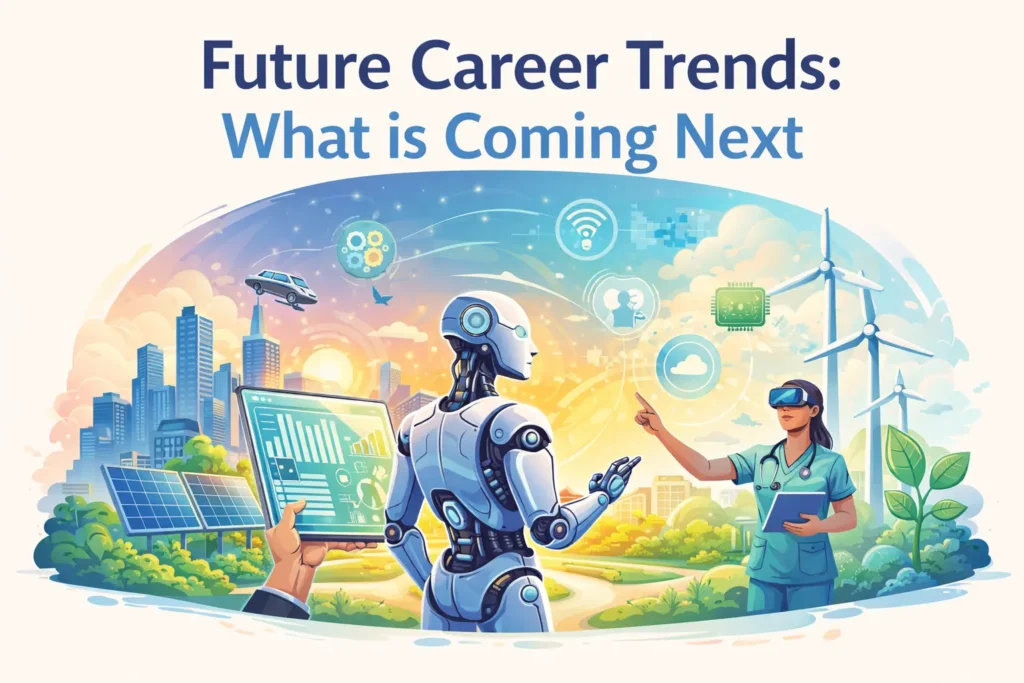
Future Career Trends: What is Coming Next
Understanding future trends helps you choose a career that will stay valuable. Here are the biggest trends shaping 2026 and beyond:
Trend 1: AI-Assisted Jobs (Not Replaced)
AI will not replace most jobs. Instead, workers who use AI tools will replace workers who do not. Almost every career now requires some AI skills.
Examples:
- Writers use AI to research and draft content faster
- Designers use AI to generate initial concepts
- Programmers use AI coding assistants
- Marketers use AI to analyze customer data
Learning how to use AI in digital marketing or your field gives you a huge advantage.
Trend 2: Remote Work Continues
Remote jobs are not going away. In 2026, about 61% of technology companies plan to hire more workers, and many offer remote positions.
Popular Remote Careers:
- Software Developer
- Digital Marketer
- Writer/Content Creator
- Customer Service Representative
- Virtual Assistant
- Online Teacher/Tutor
- Graphic Designer
- Accountant
Remote work lets you work from anywhere and saves commuting time.
Trend 3: Green Energy Jobs Exploding
Clean energy employment is expanding faster than the overall labor market. The Inflation Reduction Act created millions of jobs in renewable energy.
Green Energy Careers:
- Solar Panel Installer
- Wind Turbine Technician
- Sustainability Consultant
- Environmental Engineer
- Energy Auditor
- Electric Vehicle Technician
These careers help the planet and pay well.
Trend 4: Healthcare Demand Growing
The U.S. population is aging. More older people means more need for healthcare workers. Healthcare and social assistance will drive the largest share of U.S. job gains this decade.
Growing Healthcare Roles:
- Nurse Practitioner
- Home Health Aide
- Medical and Health Services Manager
- Physical Therapist
- Occupational Therapist
Trend 5: Skills Matter More Than Degrees
Monster’s report highlights that skill-based, credentialed, and hands-on jobs continue to outperform white-collar support roles.
Companies now care more about what you can do than where you went to school. Certificates, bootcamps, and online courses can often replace traditional four-year degrees.
Understanding emerging technologies to watch helps you develop relevant skills.
Skills Needed for Future Jobs
No matter which career you choose, certain skills will help you succeed in 2026 and beyond:
Technical Skills
1. AI and Machine Learning Basics You do not need to be an expert, but understanding how AI works helps in almost any field.
2. Data Analysis Companies need people who can understand and explain data. Basic Excel, SQL, or Python skills are valuable.
3. Cybersecurity Awareness As cyber threats increase, knowing how to protect information becomes essential.
4. Digital Marketing Almost every business needs online presence. Digital marketing skills are useful everywhere.
5. Cloud Computing Most companies now use cloud services. Understanding platforms like AWS, Azure, or Google Cloud helps.
Soft Skills
1. Communication Clear writing and speaking skills matter in every career.
2. Problem-Solving Employers value people who can figure out solutions independently.
3. Adaptability The job market changes fast. Being able to learn new things quickly is crucial.
4. Emotional Intelligence Understanding people and working well with others never goes out of style.
5. Critical Thinking AI can do many tasks, but humans still need to make final decisions and think strategically.
How to Choose a Career After 12th
If you just finished high school, you have many options. Here is how to decide:
Step 1: Identify Your Interests
What subjects did you enjoy in school? Science? Math? Art? Languages? Your interests point toward career categories.
If You Liked Science:
- Doctor
- Nurse
- Pharmacist
- Medical Lab Technician
- Biotechnology Specialist
If You Liked Math:
- Engineer
- Accountant
- Data Analyst
- Actuary
- Financial Analyst
If You Liked Computers:
- Software Developer
- Cybersecurity Specialist
- Web Developer
- IT Support Specialist
- Cloud Engineer
If You Liked Art:
- Graphic Designer
- UI/UX Designer
- Photographer
- Video Editor
- Interior Designer
Step 2: Consider Education Requirements
Some careers require long education (doctor takes 8+ years), while others need only certificates or short training.
Quick Entry Careers (1-2 Years):
- Medical Assistant
- Web Developer (bootcamp)
- Electrician
- Paralegal
- Dental Hygienist
Medium Entry Careers (4 Years):
- Engineer
- Teacher
- Accountant
- Nurse (BSN)
- Marketing Manager
Long Entry Careers (6-8+ Years):
- Doctor
- Lawyer
- Dentist
- Pharmacist
- Professor
Step 3: Talk to Professionals
Find people working in careers you find interesting. Ask them:
- What do you actually do all day?
- What do you like most about your job?
- What do you dislike?
- What education did you need?
- What is the work-life balance like?
Their honest answers help you understand if the career is really right for you.
How to Choose a Career After Graduation
Already have a degree? Here is how to pick your career path:
Leverage Your Degree
Think about what careers relate to your field of study. But also remember that many successful people work in fields different from their degree.
Examples:
- English degree → Writer, Editor, Marketing, Content Creator
- Psychology degree → HR Manager, Counselor, Market Researcher
- Biology degree → Research Scientist, Healthcare, Pharmaceutical Sales
- Business degree → Almost any business role
Consider Your Skills Over Your Degree
Make a list of skills you developed in college:
- Research skills
- Writing skills
- Presentation skills
- Team project experience
- Technical skills
- Leadership experience
These skills matter more than your major.
Look at Entry-Level Opportunities
Many companies hire recent graduates for entry-level positions that provide training. These include:
- Management trainee programs
- Sales representative positions
- Marketing assistant roles
- Junior analyst positions
- Associate consultant roles
Start somewhere and learn. You can always change careers later.
Freelancing Careers and Entrepreneurship
Not everyone wants a traditional job. Freelancing and entrepreneurship offer freedom and flexibility.
Popular Freelancing Careers
1. Freelance Writer
- Write articles, blog posts, and web content
- Income: $30-$150+ per hour depending on experience
2. Graphic Designer
- Create logos, marketing materials, and designs
- Income: $40-$100+ per hour
3. Web Developer
- Build websites for clients
- Income: $50-$150+ per hour
4. Virtual Assistant
- Help businesses with administrative tasks
- Income: $15-$50 per hour
5. Social Media Manager
- Manage social media accounts for businesses
- Income: $25-$75 per hour
6. Video Editor
- Edit videos for YouTubers and businesses
- Income: $30-$100+ per hour
Freelancing lets you work from anywhere and choose your own schedule. However, you must find your own clients and handle your own taxes.
Entrepreneurship Career Path
Starting your own business is risky but rewarding. Some people are natural entrepreneurs.
Signs You Might Be an Entrepreneur:
- You hate being told what to do
- You have lots of business ideas
- You are willing to take risks
- You can handle uncertainty
- You are self-motivated
If you want to start a business, read our guide on how to grow a business from scratch.
Career Development Plan: Making It Happen
Knowing what career you want is just the first step. Now you need a plan to get there.
Create Your 5-Year Career Plan
Year 1:
- Research your chosen career thoroughly
- Get necessary education or training
- Build relevant skills
- Create a portfolio or resume
Year 2:
- Apply for entry-level positions
- Get your first job in the field
- Learn from experienced professionals
- Build your professional network
Year 3:
- Develop specialized skills
- Take on more responsibility
- Consider additional certifications
- Update your resume with achievements
Year 4:
- Apply for promotions or better positions
- Mentor newcomers in your field
- Expand your professional network
- Increase your income
Year 5:
- Reach mid-level position
- Consider specialization or management track
- Plan next career moves
- Evaluate if you still enjoy this path
Keep Learning
The most successful people never stop learning. Take courses, read industry news, attend workshops, and stay current with trends in your field.
Understanding the benefits of artificial intelligence and other new technologies keeps you competitive.
Common Career Choice Mistakes to Avoid
Many people make these mistakes when choosing careers:
Mistake 1: Choosing Based Only on Money High pay does not guarantee happiness. If you hate your job, no amount of money makes it worthwhile.
Mistake 2: Following Someone Else’s Dream Your parents, friends, or society might push you toward certain careers. Choose what YOU want, not what others expect.
Mistake 3: Not Researching Enough Do not pick a career based on one conversation or TV show. Research thoroughly.
Mistake 4: Ignoring Your Personality An introvert in a sales job or an extrovert in a solitary role will struggle. Match your career to who you are.
Mistake 5: Thinking Your First Choice Is Forever Most people change careers 5-7 times in their lifetime. Your first career does not lock you in forever.
Mistake 6: Waiting for the “Perfect” Career No career is perfect. Choose something good enough to start, then adjust as you learn more about yourself.
Career Path Guidance: Final Tips
Here is final advice for choosing the right career path:
1. Try Before You Commit Internships, volunteer work, and part-time jobs let you test careers before making long-term commitments.
2. Use All Available Resources Career counselors, assessment tests, online research, and informational interviews all help.
3. Trust Your Gut If something feels wrong, it probably is. If something excites you, explore it further.
4. Be Patient Finding the right career takes time. Do not rush into something just because you feel pressure to decide quickly.
5. Stay Flexible The career you want at 20 might change by 30. Allow yourself to evolve and change paths if needed.
6. Focus on Growth Choose careers that offer opportunities to learn and advance, not just immediate benefits.
7. Consider Work-Life Balance Some high-paying careers require 60-80 hour weeks. Decide what matters more: money or time?
Conclusion
Choosing the right career path is a journey, not a single decision. It requires self-reflection, research, testing, and patience.
Remember These Key Points:
- Understand yourself first through assessment tests and reflection
- Match your personality to suitable careers
- Research in-demand jobs and future trends
- Develop both technical and soft skills
- Create a realistic career development plan
- Stay flexible and open to change
The job market in 2026 offers incredible opportunities for those willing to learn and adapt. Technology careers, healthcare roles, green energy jobs, and skilled trades all show strong growth.
Whether you choose a traditional career, remote work, freelancing, or entrepreneurship, the right choice is the one that matches your unique personality, skills, and values.
Start today. Take a career assessment test, research three careers that interest you, and talk to one person working in your desired field. Small steps lead to big career success.
For more guidance on building successful careers and businesses, explore our articles on business growth strategies and latest technology trends.
Your perfect career is out there. Now go find it!