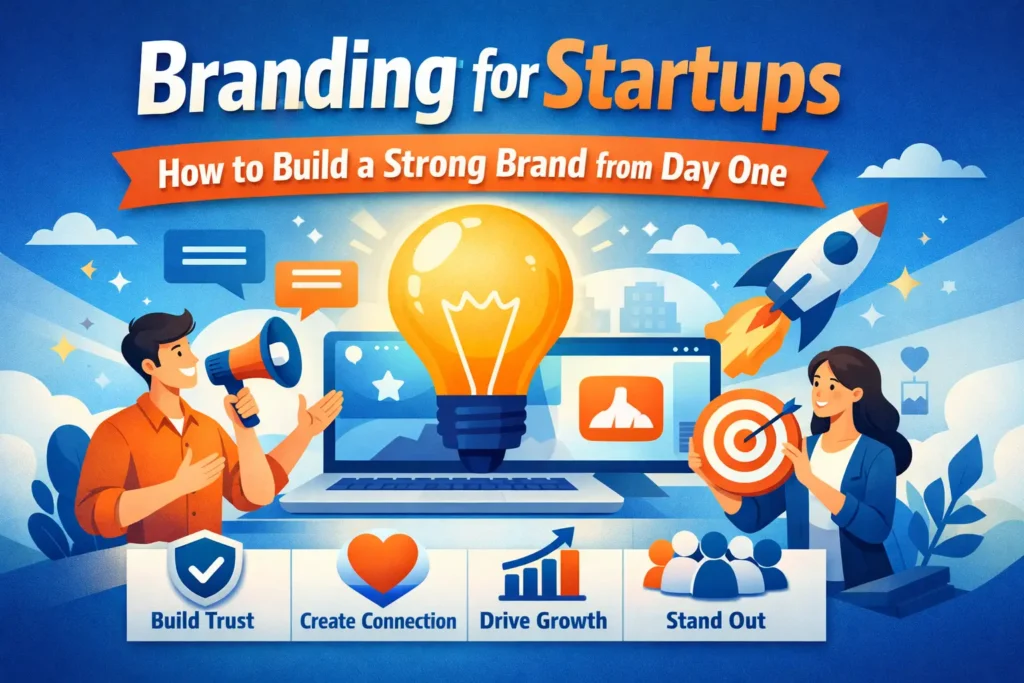
Branding for startups is not just about a logo or a catchy name. It is about creating a clear identity, building trust, and making your business memorable in a crowded market. For startups, strong branding helps attract customers, investors, and long-term growth opportunities.
In today’s competitive business environment, startups that focus on branding early gain a significant advantage over those that delay it.
Why Branding Is Important for Startups
A strong brand helps startups stand out and communicate their value clearly. Customers are more likely to choose brands they recognize and trust, even if they are new to the market.
Effective startup branding helps:
- Build credibility and trust
- Create emotional connections with customers
- Improve customer retention
- Support long-term business growth
Strong branding also supports scalable growth, which aligns closely with proven business growth strategies for long-term success.
Core Elements of Branding for Startups
Brand Identity
Brand identity includes your logo, colors, typography, and overall visual style. These elements should be consistent across your website, social media, and marketing materials.
Consistency plays a major role in recognition and trust, especially during the early stages of growth.
Brand Message and Voice
Your brand message defines how you communicate with your audience. A clear and simple brand voice helps customers understand who you are and what you stand for.
Startups should focus on clarity rather than complexity, especially when entering competitive markets.
According to Forbes, brands with consistent messaging are more likely to build long-term customer loyalty.
Target Audience Clarity
Understanding your audience is essential for effective branding. Startups must clearly define who they serve and how they solve real problems.
Audience research also supports smarter marketing strategies for business growth by ensuring branding and promotions align with customer needs.
Branding Strategies for Startup Success
Build a Strong Online Presence
Your website and social media profiles are often the first interaction customers have with your brand. A professional and user-friendly online presence strengthens credibility.
Branding efforts become more effective when combined with modern digital tools, as explained in how technology is changing businesses.
Focus on Brand Trust
Trust is one of the most valuable assets for startups. Transparent communication, quality products, and consistent branding help establish reliability.
Harvard Business Review highlights that trusted brands grow faster and retain customers longer.
Align Branding with Long-Term Vision
Startup branding should not only focus on short-term attention but also long-term goals. A brand that evolves with the business avoids costly rebranding later.
This approach works especially well when startups plan growth from the beginning, similar to strategies used to grow a business from scratch.
Role of Marketing in Startup Branding
Branding and marketing work best together. Marketing amplifies brand visibility, while branding ensures the message is consistent and memorable.
A well-defined brand also makes it easier to create effective campaigns, ads, and content, as discussed in how to build a strong marketing plan.
According to HubSpot, strong branding improves marketing performance across all channels.
Common Branding Mistakes Startups Should Avoid
- Inconsistent visuals and messaging
- Ignoring customer feedback
- Copying competitors instead of being authentic
- Overcomplicating brand identity
- Delaying branding decisions
Avoiding these mistakes helps startups maintain clarity and confidence as they grow.
How to Measure Branding Success
Startups can measure branding success through:
- Brand awareness
- Customer engagement
- Website traffic
- Social media growth
- Customer trust and retention
Google emphasizes brand consistency and user experience as key signals for long-term success.
Final Thoughts
Branding for startups is a foundational step toward sustainable growth. A clear brand identity, strong messaging, and consistent presence help startups earn trust and stand out in competitive markets.
By aligning branding with business goals, technology, and smart marketing strategies, startups can build a brand that supports long-term success and scalability.